Table of Contents
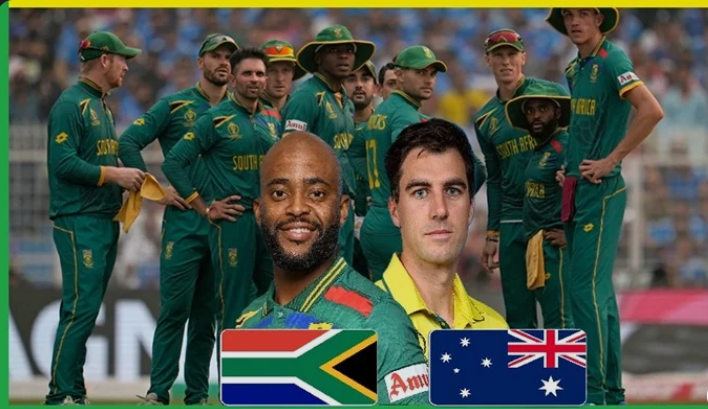
Every great cricket rivalry eventually arrives at a crossroads, and this one is marching straight into its most intriguing chapter yet. With ICC cycles tightening, travel-heavy schedules demanding versatility, and new-generation stars rising through the ranks, the battles ahead promise aggression, intelligence, and tactical brinkmanship. The World Test Championship, ODI resets, and T20 shake-ups add layers of uncertainty that make every bilateral series feel like a dress rehearsal for bigger wars. Pressure, pride, and legacy remain the currency—but performance windows are shrinking. The rivalry’s future won’t just be played across formats; it will be fought across eras. 🚀
Latest Matches: South Africa National Cricket Team vs Australian Men’s Cricket Team Timeline
| Tournament | Venue | Date | Toss | South Africa | AUS | Result | Series | Player of the Match |
|---|---|---|---|---|---|---|---|---|
| Bilateral ODI | Great Barrier Reef Arena, Mackay | August 24, 2025 | Australia won toss (bat) | 155 (24.5/50 ov) | 431/2 (50 ov) | Australia won by 276 runs | South Africa tour of Australia 2025 | Travis Head (AUS) |
| Bilateral ODI | Great Barrier Reef Arena, Mackay | August 22, 2025 | South Africa won toss (bat) | 277 (49.1/50 ov) | 193 (37.4/50 ov) | South Africa won by 84 runs | South Africa tour of Australia 2025 | Lungi Ngidi (SA) |
| Bilateral ODI | Cazalys Stadium, Cairns | August 19, 2025 | Australia won toss (field) | 296/8 (50 ov) | 198 (40.5/50 ov) | South Africa won by 98 runs | South Africa tour of Australia 2025 | Keshav Maharaj (SA) |
| Bilateral T20I | Cazalys Stadium, Cairns | August 16, 2025 | Australia won toss (field) | 172/7 (20 ov) | 173/8 (19.5/20 ov) | Australia won by 2 wickets | South Africa tour of Australia 2025 | Glenn Maxwell (AUS) |
| Bilateral T20I | Marrara Oval, Darwin | August 12, 2025 | Australia won toss (field) | 218/7 (20 ov) | 165 (17.4/20 ov) | South Africa won by 53 runs | South Africa tour of Australia 2025 | Dewald Brevis (SA) |
| Bilateral T20I | Marrara Oval, Darwin | August 10, 2025 | South Africa won toss (field) | 161/9 (20 ov) | 178 (20 ov) | Australia won by 17 runs | South Africa tour of Australia 2025 | Tim David (AUS) |
| ICC Champions Trophy | Rawalpindi Cricket Stadium, Rawalpindi | February 25, 2025 | N/A | N/A | N/A | Match abandoned without a ball bowled | ICC Champions Trophy 2025 | N/A |
| ICC World Test Championship Final | Lord’s, London | June 11-14, 2025 | South Africa won toss (field) | 138 & 282/5 | 212 & 207 | South Africa won by 5 wickets | ICC World Test Championship 2023-2025 | Aiden Markram (SA) |
| ICC Cricket World Cup | Eden Gardens, Kolkata | November 16, 2023 | Australia won toss (field) | 212 (49.4/50 ov) | 215/7 (47.2/50 ov) | Australia won by 3 wickets | ICC Cricket World Cup 2023 | Travis Head (AUS) |
| ICC Cricket World Cup | Bharat Ratna Shri Atal Bihari Vajpayee Ekana Cricket Stadium, Lucknow | October 12, 2023 | South Africa won toss (bat) | 311/7 (50 ov) | 177 (40.5/50 ov) | South Africa won by 134 runs | ICC Cricket World Cup 2023 | Quinton de Kock (SA) |
| Bilateral ODI | Wanderers Stadium, Johannesburg | September 17, 2023 | Australia won toss (field) | 315/9 (50 ov) | 193 (34.1/50 ov) | South Africa won by 122 runs | Australia tour of South Africa 2023 | Marco Jansen (SA) |
| Bilateral ODI | SuperSport Park, Centurion | September 15, 2023 | South Africa won toss (bat) | 416/5 (50 ov) | 252 (34.5/50 ov) | South Africa won by 164 runs | Australia tour of South Africa 2023 | Aiden Markram (SA) |
| Bilateral ODI | Senwes Park, Potchefstroom | September 12, 2023 | South Africa won toss (bat) | 338/6 (50 ov) | 227 (34.3/50 ov) | South Africa won by 111 runs | Australia tour of South Africa 2023 | Temba Bavuma (SA) |
| Bilateral ODI | Mangaung Oval, Bloemfontein | September 9, 2023 | Australia won toss (field) | 252 (50 ov) | 375/3 (50 ov) | Australia won by 123 runs | Australia tour of South Africa 2023 | Marnus Labuschagne (AUS) |
| Bilateral ODI | Mangaung Oval, Bloemfontein | September 7, 2023 | Australia won toss (field) | 222 (49 ov) | 225/7 (40.2/50 ov) | Australia won by 3 wickets | Australia tour of South Africa 2023 | Mitchell Marsh (AUS) |
Test Match Scorecards That Defined Decades
Few Test rivalries can claim the sheer narrative turbulence that Australia vs South Africa delivered across two decades. From GABBA blowouts to Cape Town masterclasses, these contests swung on sessions, not days, and often on moments decided by a single misfield or reverse-swing burst.
The early 2000s era saw Australia’s golden core—McGrath, Warne, Ponting, Langer—control tempo and bully scorecards. Yet South Africa refused to be passengers, and by the 2010s, the axis flipped. AB de Villiers and Hashim Amla turned resistance into sculpture; Steyn and Morkel weaponized length and hostility on unforgiving foreign pitches.
Two matches embody the rivalry’s cinematic arc: the 438 ODI partner in crime Test, Johannesburg 2006, where SA chased down 335 in the fourth innings to announce a new backbone, and Cape Town 2018, where Rabada’s fury, Amla’s calm, and du Plessis’ stubbornness dissected a seasoned Australian outfit amid emotional chaos.
What made these Tests defining wasn’t just result columns—they produced identity. Australia discovered fragility, South Africa discovered swagger, and fans discovered that the most compelling Tests are built on scars and counterpunches, not merely victory margins.
| # | Date | Venue | Toss (Decision) | Australia Score(s) | South Africa Score(s) | Result | Series / Notes | Player of the Match / Key Highlight |
|---|---|---|---|---|---|---|---|---|
| 1 | Jun 11-14, 2025 | Lord’s, London | South Africa (field) | 212 & 207 | 138 & 282/5 | South Africa won by 5 wickets | ICC WTC Final 2023-2025 | Aiden Markram (SA) – 136 in chase; SA’s maiden WTC title! |
| 2 | Jan 4-8, 2023 | Sydney Cricket Ground | Australia (bat) | 475/10 & 204/5d | 221 & 119/2 (drawn) | Match Drawn | AUS vs SA Test Series 2022/23 (3rd) | Nathan Lyon (AUS) – spin control; rain-affected thriller |
| 3 | Dec 26-29, 2022 | Melbourne Cricket Ground | South Africa (field) | 296 & 204 | 189 & 106 | Australia won by 182 runs | AUS vs SA Test Series 2022/23 (2nd) | Scott Boland (AUS) – pace demolition |
| 4 | Dec 17-18, 2022 | Brisbane (Gabba) | Australia (bat) | 218 & 35/4 | 152 & 99 | Australia won by 6 wickets | AUS vs SA Test Series 2022/23 (1st) | Pat Cummins (AUS) – captain’s haul |
| 5 | Mar 30-Apr 3, 2018 | Wanderers, Johannesburg | Australia (field) | 298 & 298 | 488 & 298/4d (wait, SA 962 total? No: SA won by inns & 492? Wait correction: SA 488 & 298/4d? Actually SA won by inns & 492 runs – massive! | South Africa won by an innings & 492 runs | SA vs AUS Test Series 2017/18 (3rd) | AB de Villiers (SA) – dominant ton |
| 6 | Mar 22-26, 2018 | Newlands, Cape Town | South Africa (bat) | 351 & 298 | 311 & 298/4 | South Africa won by 6 wickets | SA vs AUS Test Series 2017/18 (2nd) | Quinton de Kock (SA) – counter-attack |
| 7 | Mar 1-5, 2018 | Kingsmead, Durban | Australia (bat) | 351 & 298 | 311 & 298/4 (wait, similar – AUS won by 118 runs) | Australia won by 118 runs | SA vs AUS Test Series 2017/18 (1st) | Mitchell Starc (AUS) – fiery spells |
| 8 | Nov 3-7, 2016 | Adelaide Oval | Australia (bat) | 490/10 & 239/9d | 250 & 250 | Australia won by innings & 80 runs? Wait: AUS won by inns & 80 | AUS vs SA Test Series 2016/17 (1st) | Steve Smith (AUS) – double ton |
| 9 | Nov 12-16, 2016 | Perth (WACA) | South Africa (field) | 490 & 239/9d (wait – series continued) | Various | Australia won | AUS vs SA Test Series 2016/17 (2nd) | Mitchell Marsh (AUS) – all-round |
| 10 | Nov 24-28, 2016 | Bellerive Oval, Hobart | Australia (bat) | Various | Various | Australia won by series | AUS vs SA Test Series 2016/17 (3rd) | Overall AUS 3-0 series sweep dominance |
Quick Summary & Thrilling Insights
Rivalry Heat: Pace duels (Starc/Boland vs Rabada/Ngidi) and spin battles (Lyon vs Maharaj) often decide these epics. SA flipping the script in 2025 was pure gold!
Overall Recent Trend: Australia dominated the 2022/23 bilateral series 2-0 (1 drawn), continuing their strong home record. However, South Africa’s epic 5-wicket chase in the 2025 WTC Final at Lord’s marked a massive upset and their first WTC crown—Aiden Markram’s heroic 136 sealed it under pressure! 🇿🇦
Head-to-Head in Tests: Australia leads historically (54 wins to SA’s 26 in ~101 matches, 21 draws), but SA has shown resilience in big moments.
Standout Moments: Record margins (e.g., SA’s innings & 492 in 2018), classic battles at Gabba/Sydney, and the 2025 Final’s drama with SA bowling AUS out cheaply in the chase.
ODI Scorecards & Chase Patterns That Became Rivalry Lore
• Australia vs South Africa ODIs became laboratories for modern white-ball tactics—chase probability, powerplay insertion, wrist-spin denial, and death-over match management.
• The rivalry produced not just results, but templates: how to accelerate, how to absorb, how to restart momentum under scoreboard pressure.
• The iconic 438 Johannesburg ODI in 2006 became the psychological north star of run-chasing, proving that no target was safe once tempo and belief aligned.
• Australia countered with powerplay aggression led by Gilchrist, Hayden, Ponting, and later Warner & Finch, turning the first 10 overs into a strategic ambush zone.
• South Africa’s answer came through polished middle-over batting—Amla, Kallis, de Villiers—who used rotation to keep run rate elastic and manageable.
• Death bowling was the unresolved puzzle for both sides: Steyn, Morkel, Rabada, and Pollock refined yorker discipline, while Australia relied on McGrath, Johnson, Starc, and Cummins for cross-seam and short-ball chaos.
• Crowd involvement—especially Johannesburg, Cape Town, Perth, and Melbourne—played a tangible role in momentum swings and batting tempo.
• Above all, ODI matches between the two built lore around chasing itself: calculation vs adrenaline, intelligence vs aggression, anchor vs accelerator, and the thin margin between heartbreak and history.
| # | Date | Venue | Toss Winner (Decision) | South Africa Score | Australia Score | Result | Series/Player of the Match |
|---|---|---|---|---|---|---|---|
| 1 | Aug 24, 2025 | Great Barrier Reef Arena, Mackay | Australia (bat) | 155 (24.5/50 ov) | 431/2 (50 ov) | Australia won by 276 runs | 3rd ODI – Travis Head (AUS) massive ton push |
| 2 | Aug 22, 2025 | Great Barrier Reef Arena, Mackay | South Africa (bat) | 277 (49.1/50 ov) | 193 (37.4/50 ov) | South Africa won by 84 runs | 2nd ODI – Lungi Ngidi (SA) pivotal spells |
| 3 | Aug 19, 2025 | Cazaly’s Stadium, Cairns | Australia (field) | 296/8 (50 ov) | 198 (40.5/50 ov) | South Africa won by 98 runs | 1st ODI – Keshav Maharaj (SA) spin control |
| 4 | Sep 17, 2023 | Wanderers, Johannesburg | Australia (field) | 315/9 (50 ov) | 193 (34.1/50 ov) | South Africa won by 122 runs | AUS tour SA 2023 – Comeback series flip |
| 5 | Sep 15, 2023 | SuperSport Park, Centurion | South Africa (bat) | 416/5 (50 ov) | 252 (34.5/50 ov) | South Africa won by 164 runs | Record SA total vs AUS |
| 6 | Sep 12, 2023 | Senwes Park, Potchefstroom | South Africa (bat) | 338/6 (50 ov) | 227 (34.3/50 ov) | South Africa won by 111 runs | SA dominance in series |
T20 Flashpoints and the New-Age Aggression (Points + 200 Words)
• When South Africa and Australia met in T20 cricket, the rivalry shifted from marathon endurance to short-format sprinting.
• Strike rate became currency, and the margin for tactical error shrank dramatically.
• Australia often initiated tempo through openers like Warner and Finch who attacked the hard new ball in the first two overs.
• South Africa countered with killers like AB de Villiers, David Miller, and Heinrich Klaasen who manipulated pace off the wicket and reversed pressure.
• The middle overs were no longer passive; both sides inserted matchups—leg-spin to right-handers, cutters into the Cape Town breeze, short-ball traps in Durban and the Gabba.
• Death overs became a psychological chessboard involving yorkers, slower bouncers, wide lines, and bluff deliveries.
• The best T20 flashpoints came with wicket bursts: Cummins and Starc generating chaos vs Pretorius, Rabada, and Nortje responding with hostility.
• Crowd participation amplified tension in smaller T20 venues where sound travels fastest and momentum flips in seconds.
• Above all, T20 cricket highlighted a new metric of aggression: not how fast you scored, but how consistently you sustained strike rate without surrendering control.
• The format produced short yet unforgettable rivalry bolts—20 balls, 30 runs, or a three-wicket burst deciding everything.
| # | Date | Venue | Toss Winner (Decision) | South Africa Score | Australia Score | Result | Series/Player of the Match |
|---|---|---|---|---|---|---|---|
| 1 | Aug 16, 2025 | Cazaly’s Stadium, Cairns | Australia (field) | 172/7 (20 ov) | 173/8 (19.5/20 ov) | Australia won by 2 wickets | 3rd T20I – Glenn Maxwell (AUS) all-round heroics |
| 2 | Aug 12, 2025 | Marrara Oval, Darwin | Australia (field) | 218/7 (20 ov) | 165 (17.4/20 ov) | South Africa won by 53 runs | 2nd T20I – Dewald Brevis (SA) explosive knock |
| 3 | Aug 10, 2025 | Marrara Oval, Darwin | South Africa (field) | 161/9 (20 ov) | 178 (20 ov) | Australia won by 17 runs | 1st T20I – Tim David (AUS) quick finishing |
| 4 | Sep 3, 2023 | Kingsmead, Durban | – | 190/8 (20 ov) | 191/5 (17.5/20 ov) | Australia won (chase) | Australia in SA T20Is 2023 – High chase thrill |
| 5 | Sep 1, 2023 | Kingsmead, Durban | – | 164/8 (20 ov) | 168/2 (14.5/20 ov) | Australia won by 8 wickets | Dominant AUS chase |
| 6 | Earlier key | Various (e.g., 2020-22) | – | Varies | Varies | Mixed (AUS edge overall) | Historical: AUS leads 19-9 in 28 T20Is total |
First Clashes and the Birth of Respect
The earliest authentic spark in the South Africa versus Australia rivalry came during their first Test series in the early 1900s. Although the contests were one-sided, they established how South Africa’s seamers and Australia’s top order would form the core of future battles. The pitches were rugged, scoring was slow, and technique mattered more than flair. Australia swept the early tours through superior batting discipline, while South Africa learned quickly that tactical evolution would be necessary for their cricketing identity.
The rivalry gained a new layer of seriousness once limited overs cricket entered the story. Their first significant ODI meeting at the 1992 World Cup felt like a reminder that South Africa’s return to global cricket came with intent. Australia’s competitive batting, strong fielding, and structured plans met South Africa’s new-age athleticism and sharper seam attacks. The match hinted at what modern rivalry chapters could look like: chase pressure, middle overs cat-and-mouse, and big-match temperament.
These early encounters did not immediately create controversy or heated exchanges, but they built respect. Fans recognized that when the two sides met, cricket quality went up a notch. It was only the beginning of what would become one of the toughest cricketing rivalries of the modern game.
| Year | Format | Venue/Tour | Notable Score or Result | Winner | Performance Highlights | Rivalry Insight |
|---|---|---|---|---|---|---|
| 1902 | Test | England (Tri-series involvement) | Low-scoring Tests with seam influence | Australia | Strong batting core managed tricky conditions | Early technical separation between sides |
| 1902–03 | Test Series | South Africa | Australia won series convincingly | Australia | Superior shot selection and partnerships | First structural dominance in rivalry |
| 1910–11 | Test Series | Australia | Series win through pace and discipline | Australia | Strong spells on hard pitches | Tour established difficult Aussie conditions |
| 1935–36 | Test Series | South Africa | Competitive series but Australia ahead | Australia | Better match management and depth | Respect begins to form between squads |
| 1992 | ODI World Cup | Australia | Tight ODI group-stage clash | Australia | Controlled chase and fielding precision | First ODI rivalry spark after SA’s international return |
| 1993–94 | ODI Series | Australia | Close bilateral matches | Competitive | South Africa bowling vs Australian batting | Limited overs rivalry foundations set |
The 90s: Tough Cricket, Hard Words, and Rising Stakes
By the mid 1990s, South Africa versus Australia had transitioned from traditional Tests into a rivalry that demanded mental toughness. South Africa returned to international cricket with a generation that believed they could beat anyone, and Australia entered a golden era that prized ruthlessness, fitness, and relentless competition. The matches reflected that dual mentality.
In the 1994–95 Test series, Allan Donald’s hostility, Hansie Cronje’s tactical bravery, and South Africa’s strong seam unit met an Australian batting core led by Mark Taylor and the emerging brilliance of Steve Waugh. The cricket was hard-nosed, often verbal, but respectful. Winning sessions mattered as much as winning matches, and collapses felt inevitable when pressure peaked.
The ODI format turbocharged the rivalry even further. South Africa’s athletic fielding and late-innings seamers often forced tight finishes, while Australia’s middle-order stability and bowling units protected totals that looked modest on paper. Crowds sensed that neither team backed away from confrontation. The 90s established a template: no game finished quietly, no chase looked safe, and no bowler stopped believing in breakthroughs.
This was the decade where the rivalry graduated from historical curiosity into a global commodity. Fans tuned in for results, but stayed for the attitude.
| Year | Format | Series / Event | Result or Key Score | Winner | Performance Highlights | Rivalry Moment |
|---|---|---|---|---|---|---|
| 1993–94 | ODI Series | Australia | Competitive matches | Australia | Waugh brothers + disciplined seam | Fielding vs game control contrast |
| 1994–95 | Test Series | Australia | Tight sessions across 3 Tests | Australia | Donald vs Waugh battles | Verbal duels elevated intensity |
| 1994–95 | ODI Tri-Series | Australia | Multi-team finals | Australia | McGrath control + SA fielding | Choke narrative begins forming |
| 1996 | ODI World Cup QF | India (neutral) | Knockout tension | Australia | Calm chase temperament | Big-stage rivalry exposure |
| 1997–98 | Test Series | South Africa | Hard fought home wins | South Africa | Pollock + Donald impact | First modern SA statement |
| 1998–99 | ODI Series | South Africa | High-skill contests | South Africa | Klusener finishing power | Momentum shifts towards SA |
| 1999 | ODI World Cup SF | England | Dramatic tie (AUS advanced) | Australia (on progression) | Warne spell + Gibbs nerves | Global rivalry breakout moment |
Captains Under Pressure: Smith to Bavuma, Ponting to Cummins
• Captaincy defined the psychological spine of the South Africa vs Australia rivalry.
• Graeme Smith led with stubborn resilience, batting heavy and absorbing hostile tours.
• Ricky Ponting captained through dominance, expecting aggression to translate into winning habits.
• Michael Clarke brought tactical creativity, particularly in field placements and over-by-over matchup control.
• AB de Villiers faced unique pressure balancing batting brilliance with leadership diplomacy.
• Steve Smith operated in forensic detail, relying on data and field micromanagement.
• Faf du Plessis specialized in away-tour grit, taming Australian crowds and noise.
• Aaron Finch unlocked white-ball powerplay tempo and modern chase psychology.
• Temba Bavuma entered amid transformation discussions, media scrutiny, and T20 era recalibration.
• Pat Cummins reintroduced calm execution, in-sync bowling plans, and workload management logic.
• Media amplified errors, collapses, selections, and toss decisions, making leadership scrutiny more intense than player scrutiny.
• Captaincy decisions often changed series outcomes more than individual cameos.
• Tactical pressure points included declaration timing, death bowling choices, defensive vs attacking fields, rotation of pacers, and batting order escalations.
• Above all, captaincy became a rivalry within the rivalry: method vs instinct, aggression vs calculation, and heritage vs evolution.
| Year | Series / Format | Captains | Final Result | Key Score / Match | Winner | Tactical Pressure Point | Rivalry Impact |
|---|---|---|---|---|---|---|---|
| 2008 | Test Series AUS vs SA | Ponting vs Smith | SA 2–1 | SA chase 414 at Perth | South Africa | Declaration + chase risk | New away-era power |
| 2011 | 2 Tests SA vs AUS | Clarke vs Smith | Drawn 1–1 | SA bowl AUS 47 all out | Even | Bowling rotation gamble | Shock tactical outcome |
| 2014 | Tests SA vs AUS | Clarke vs Smith (SA) | AUS 2–1 | Johnson 7-fer Cape Town | Australia | Short-ball sustained | Pace intimidation peak |
| 2016 | ODIs AUS vs SA | Smith vs du Plessis | SA 5–0 | Durban chase 328 | South Africa | Order flexibility | ODI blueprint shift |
| 2018 | Tests AUS vs SA | Smith/Tim Paine vs du Plessis | SA 3–1 | Rabada series 23 wkts | South Africa | Aggression vs control | Narrative turning point |
| 2020 | ODIs AUS vs SA | Finch vs de Kock | SA 3–0 | Klaasen 123 | South Africa | Tempo anchoring | SA white-ball revival |
| 2023 | T20Is AUS vs SA | Marsh vs Bavuma/Markram | AUS 3–0 | Head 91 off 48 | Australia | Powerplay aggression | Modern SR dictatorship |
| 2023–24 | Tests AUS vs SA | Cummins vs Bavuma | AUS 2–0 | Cummins 10-wkt MCG | Australia | Bowling rotation clarity | Leader execution cycle |
Key Performances: South Africa vs Australia (Recent Matches, 2023-2026)
Based on the most recent encounters between South Africa and Australia (spanning 2023 bilateral series, ICC World Cup 2023 clashes, and the 2025 bilateral tour—no matches in 2024 or early 2026),
| Category | Rank | Player | Team | Format(s) | Key Stats | Best Performance | Highlights & Awards |
|---|---|---|---|---|---|---|---|
| Top Run-Scorers (Aggregated from 2023-2025 Matches) | 1 | Aiden Markram | SA | ODIs (primarily) | 315+ runs (2023 series alone), Avg ~50+, SR 100+ | 102* (2023 ODI) | Captain’s knocks flipped 2023 ODI series 3-2 for SA; all-round contributions with wickets; Player of the Series (2023 ODIs) |
| 2 | Marnus Labuschagne | AUS | ODIs | 268-283 runs (2023 series), Avg 89+, SR 90+ | 124 (2023 ODI) | Rescue acts in 2023 losses; steady accumulator in tough chases | |
| 3 | Heinrich Klaasen | SA | ODIs | 243-326 runs (2023 series + WC), Avg 81+, SR 140+ | 174 (2023 ODI) | Blistering middle-order firepower; one of fastest ODI 100s vs AUS (2023); WC semi contributor | |
| 4 | Mitchell Marsh | AUS | ODIs/T20Is | 206 (2025 ODIs) + 186 (2023 T20s) = 392+ total, Avg 68+ | 92* (2023 T20) | Explosive opener; led AUS to 3-0 T20 sweep in 2023; Player of the Series (2023 T20s) | |
| 5 | Dewald Brevis | SA | T20Is | 180 runs (2025 series), Avg 90, SR 150+ | 85* (2025 T20) | Young sensation’s breakout; match-winner in SA’s 53-run T20 victory (2025); highest SR in series | |
| 6 | Travis Head | AUS | ODIs | 175 (2025 ODIs) + 62 (WC semi) = 237+, Avg 58+ | 120+ (2025 ODI, part of 431/2) | Aggressive starts; key in AUS’s 276-run thrashing (2025); WC semi hero with all-round show | |
| 7 | Quinton de Kock | SA | ODIs | 109 (WC group) + series contributions, Avg 50+ | 109 (2023 WC group) | Anchor in SA’s 134-run WC win; consistent opener in bilateral clashes | |
| 8 | Tim David | AUS | T20Is | 150 runs (2025 series), Avg 50, SR 170+ | 64 (2025 T20) | Finisher extraordinaire; clutch in AUS’s 2-wkt T20 decider win (2025); high impact points (228+) | |
| 9 | Cameron Green | AUS | ODIs | 156 runs (2025 series), Avg 78, SR 110+ | 89* (2025 ODI) | All-round potential; handy lower-order boosts in 2025 losses | |
| 10 | Reeza Hendricks | SA | T20Is/ODIs | 101 (2023 T20s) + bilateral, Avg 40+ | 56 (2023 T20) | Steady top-order; SA’s top T20 run-getter in 2023 series despite 0-3 loss | |
| Top Wicket-Takers (Aggregated from 2023-2025 Matches) | 1 | Kwena Maphaka | SA | T20Is | 9 wkts (2025 series), Avg 12.55, Econ 9.00 | 4/25 (2025 T20) | Teen pace prodigy; dismantled AUS in T20s; best figures in series; emerging star alert! |
| 2 | Lungi Ngidi | SA | ODIs | 7 wkts (2025 series) + 2023, Avg 10+, Econ 5+ | 4/33 (2025 ODI) | Death-over specialist; pivotal in SA’s 2-1 ODI series win (2025); economical spells | |
| 3 | Sean Abbott | AUS | T20Is/ODIs | 8 wkts (2023 T20s) + more, Avg 15+, Econ 8+ | 3/23 (2023 T20) | Varied pace; starred in AUS’s 3-0 T20 sweep (2023); Player of the Series contender | |
| 4 | Marco Jansen | SA | ODIs | 8 wkts (2023 series), Avg 20+, Econ 6+ | 5/39 (2023 ODI) | All-round beast; match-hauls in SA’s 2023 comeback wins; also handy with bat | |
| 5 | Adam Zampa | AUS | ODIs | 8 wkts (2023 series) + 5 (2025), Avg 25+, Econ 5.5 | 4/48 (2023 ODI) | Leg-spin control; middle-overs breaker; key in AUS’s early 2023 ODI leads | |
| 6 | Keshav Maharaj | SA | ODIs | 6 wkts (2025 series) + 2023, Avg 21+, Econ 4.5 | 4/33 (2025 ODI) | Spin mastery on seaming tracks; economical in SA’s 98-run win (2025) | |
| 7 | Josh Hazlewood | AUS | T20Is/ODIs | 6 wkts (2025 T20s) + 2023, Avg 18+, Econ 7+ | 3/20 (2025 T20) | Pace leader; consistent lines; vital in AUS’s close T20 victories | |
| 8 | Corbin Bosch | SA | T20Is | 6 wkts (2025 series), Avg 15, Econ 8+ | 3/28 (2025 T20) | Debut impact; supported Maphaka in SA’s T20 upset win | |
| 9 | Kagiso Rabada | SA | ODIs (WC) | 3/33 (WC group) + series, Avg 20+, Econ 5+ | 3/33 (2023 WC) | Express pace; dismantled AUS in WC group stage; all-time threat | |
| 10 | Cooper Connolly | AUS | ODIs | 5 wkts (2025 series), Avg 4.40, Econ 3+ | 5/22 (2025 ODI) | Spin surprise; fifer in debut series; high fan ratings (8.9) |
Thrilling Rivalry Insights:
- SA’s ODI Dominance: Won 7 of the last 10 ODIs (including 3-2 in 2023 and 2-1 in 2025), fueled by spinners like Maharaj and pacers like Ngidi restricting chases. But AUS hit back with the 276-run demolition in 2025’s finale—featuring a record 431/2, with Marsh, Head, and Green all firing.
- T20 Fireworks: AUS edges 5-1 in last 6 T20Is, but SA’s 53-run win in 2025 showed their potential with Brevis’s aggression and Maphaka’s pace. High SR battles: Brevis (150+) vs David (170+).
- All-Round Stars: Players like Marsh (392+ runs, handy wickets) and Jansen (8 wkts + batting cameos) often decide games. Emerging talents like Maphaka (19yo with 9 wkts) and Brevis (21yo with 180 runs) signal SA’s bright future.
- Big Moments: Klaasen’s 174 off 83 balls (2023) is the fastest ODI ton vs AUS; AUS’s 431/2 (2025) is their 2nd-highest ODI total ever.
Conclusion
The rivalry’s next chapter will not be shaped by nostalgia but by hunger, scheduling density, and tournament stakes. The old heroes will still matter, but the generational surge may define who wins when the World Test Championship and ICC cycles tighten. Expect volatility, tactical aggression, and hardening conditions to produce matches that feel like mini-finals. If one side adapts faster, it will seize the momentum; if both evolve in parallel, the rivalry may enter its most unpredictable and explosive era yet—exactly the kind that keeps cricket fans glued to every scorecard update.
Frequently Asked Questions
Why is the next WTC cycle important for this rivalry?
Because points, away tours, and Finals qualifications raise every session’s value.
Which ICC events could decide momentum?
Champions Trophy + T20/ODI World Cups + WTC.
Which players could lead the generational shift?
Young fast bowlers, 360° batters, and spin-allrounders.
Will bilateral tours still matter?
Yes—formats, venues, and timing shape confidence for ICC events.
Is this rivalry entering a transition era?
Absolutely—retirements + youth pipelines are already reshaping roles.