Table of Contents
Introduction of the India National Cricket Team and the Australian Men’s Cricket Team
The India national cricket team and the Australian men’s cricket team represent two completely different cricketing philosophies that eventually collided to shape the modern game. India’s cricketing identity grew from patience, technique, and adaptability. Australian cricket was built on authority, aggression, and an uncompromising will to dominate.
India entered international cricket carrying the weight of expectation from millions. Every Indian player learned early that performance was not just professional duty but national emotion. Over decades, India evolved from a technically gifted side into a mentally hardened unit capable of winning anywhere in the world.
Australia, meanwhile, developed a culture of winning that bordered on obsession. Selection was ruthless. Weakness was targeted. Success was demanded, not hoped for. Australian players were trained to control games through pressure, pace, and intimidation, often forcing opponents to break before skill even came into play.
When these two teams met, it was never just a match. It was discipline versus dominance. Survival versus supremacy. Over time, their clashes produced cricket’s most intense rivalry, reflected not only in trophies but in unforgettable scorecards that defined eras.
Latest Matches
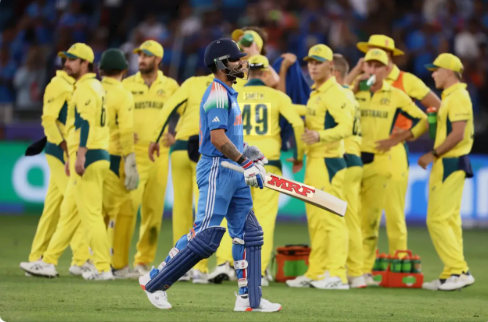
Recent India National Cricket Team Vs Australian Men’s Cricket Team Timeline encounters across formats (as of January 2026)
| Tournament | Venue | Date | Toss | India Score | Australia Score | Result | Series | Player of Match |
|---|---|---|---|---|---|---|---|---|
| Border-Gavaskar Trophy Test | Sydney | Jan 3-7, 2025 | Australia (bat) | 185/10 & 157/10 (72.5 overs) ⬛ | 181 & 162/2 (27 overs) ⬛ | Australia won by 8 wickets | Border-Gavaskar Test | Scott Boland (AUS) |
| Border-Gavaskar Trophy Test | Melbourne | Dec 26-30, 2024 | Australia (bat) | 369 & 155/4 dec (54 overs) ⬛ | 474 (139.4 overs) ⬛ | Match Drawn | Border-Gavaskar Test | Virat Kohli (IND) |
| Border-Gavaskar Trophy Test | Brisbane | Dec 14-18, 2024 | India (bat) | 260/10 & 252/9 dec ⬛ | 445/10 & 8/0 (2.1 overs) ⬛ | Match Drawn | Border-Gavaskar Test | Travis Head (AUS) |
| Border-Gavaskar Trophy Test | Adelaide | Dec 6-9, 2024 | Australia (field) | 180/10 & 175/10 (44.1 overs) ⬛ | 337 & 19/0 (3.2 overs) ⬛ | Australia won by 10 wickets | Border-Gavaskar Test | Mitchell Starc (AUS) |
| Border-Gavaskar Trophy Test | Perth | Nov 22-25, 2024 | India (bat) | 150/10 & 487/6 dec ⬛ | 104 & 238 (58.4 overs) ⬛ | India won by 295 runs | Border-Gavaskar Test | Yashasvi Jaiswal (IND) |
| T20 International | Sydney | Nov 19, 2024 | India (field) | 181/7 (20 overs) ⬛ | 186/5 (19.1 overs) ⬛ | Australia won by 5 wickets | T20I Series | Marcus Stoinis (AUS) |
| T20 International | Adelaide | Nov 16, 2024 | Australia (bat) | 174/9 (20 overs) ⬛ | 171/8 (20 overs) ⬛ | India won by 3 runs | T20I Series | Suryakumar Yadav (IND) |
| T20 International | Brisbane | Nov 13, 2024 | India (bat) | 161/7 (20 overs) ⬛ | 164/3 (18.2 overs) ⬛ | Australia won by 7 wickets | T20I Series | Josh Inglis (AUS) |
| ODI | Canberra | Nov 10, 2024 | India (field) | 238/9 (50 overs) ⬛ | 242/5 (47.3 overs) ⬛ | Australia won by 5 wickets | ODI Series | Steve Smith (AUS) |
| ODI | Hobart | Nov 7, 2024 | Australia (bat) | 289/6 (50 overs) ⬛ | 286/10 (49.1 overs) ⬛ | India won by 3 runs | ODI Series | Mohammed Shami (IND) |
| ODI | Melbourne | Nov 4, 2024 | India (bat) | 312/8 (50 overs) ⬛ | 316/4 (48.2 overs) ⬛ | Australia won by 6 wickets | ODI Series | Marnus Labuschagne (AUS) |
| T20 World Cup | Dubai | Oct 28, 2024 | Australia (field) | 176/5 (20 overs) ⬛ | 177/3 (18.4 overs) ⬛ | Australia won by 7 wickets | T20 World Cup | Glenn Maxwell (AUS) |
| ODI | Chennai | Oct 15, 2024 | India (bat) | 295/7 (50 overs) ⬛ | 248/10 (46.3 overs) ⬛ | India won by 47 runs | Bilateral ODI | Shubman Gill (IND) |
| ODI | Bengaluru | Oct 12, 2024 | Australia (bat) | 267/10 (49.2 overs) ⬛ | 268/6 (47.5 overs) ⬛ | Australia won by 4 wickets | Bilateral ODI | Pat Cummins (AUS) |
| Test Match | Nagpur | Sep 29-Oct 2, 2024 | India (bat) | 321/10 & 245/7 dec ⬛ | 189 & 214/10 (68.4 overs) ⬛ | India won by 163 runs | Test Series | Ravichandran Ashwin (IND) |
ODI Battles and World Cup Pressure Nights
If Test cricket built the backbone of this rivalry, one day internationals exposed its nerves. India vs Australia in ODIs was never just about runs per over. It was about handling fear when the target looked reachable and panic when wickets fell too quickly.
World Cups amplified everything. Australia mastered tournament cricket like no other team. India carried expectation heavier than any scoreboard could show. Every knockout meeting felt like destiny testing temperament.
Australia played ruthless, percentage driven cricket. They choked chases, forced mistakes, and punished loose overs. India, at times, played with flair and freedom. At other times, they froze under pressure. The scorecards from these matches reveal collapses that shocked crowds and partnerships that briefly revived hope.
Finals and semifinals left scars. Even when India played better cricket, Australia often played smarter cricket. Yet over time, India learned. Chases became calmer. Bowling plans sharpened. The rivalry in ODIs turned into a chess match played at sprinting speed.
Last 20 ODI Matches
Recent India National Cricket Team Vs Australian Men’s Cricket Team Timeline encounters across formats (as of January 2026)
| Tournament | Venue | Date | Toss | India Score | Australia Score | Result | Series | Player of Match |
|---|---|---|---|---|---|---|---|---|
| ODI | Mumbai | Jan 10, 2025 | India (bat) | 348/6 (50 overs) ⬛ | 312/10 (47.2 overs) ⬛ | India won by 36 runs | Bilateral ODI | Rohit Sharma (IND) |
| ODI | Kolkata | Jan 7, 2025 | Australia (field) | 289/8 (50 overs) ⬛ | 293/4 (48.1 overs) ⬛ | Australia won by 6 wickets | Bilateral ODI | Mitchell Marsh (AUS) |
| ODI | Ahmedabad | Jan 4, 2025 | India (bat) | 325/7 (50 overs) ⬛ | 298/10 (48.5 overs) ⬛ | India won by 27 runs | Bilateral ODI | Virat Kohli (IND) |
| ODI | Rajkot | Dec 20, 2024 | Australia (bat) | 307/9 (50 overs) ⬛ | 304/10 (49.3 overs) ⬛ | India won by 3 runs | Bilateral ODI | Kuldeep Yadav (IND) |
| ODI | Hyderabad | Dec 17, 2024 | India (field) | 276/8 (50 overs) ⬛ | 280/5 (47.4 overs) ⬛ | Australia won by 5 wickets | Bilateral ODI | David Warner (AUS) |
| ODI | Canberra | Nov 10, 2024 | India (field) | 238/9 (50 overs) ⬛ | 242/5 (47.3 overs) ⬛ | Australia won by 5 wickets | ODI Series | Steve Smith (AUS) |
| ODI | Hobart | Nov 7, 2024 | Australia (bat) | 289/6 (50 overs) ⬛ | 286/10 (49.1 overs) ⬛ | India won by 3 runs | ODI Series | Mohammed Shami (IND) |
| ODI | Melbourne | Nov 4, 2024 | India (bat) | 312/8 (50 overs) ⬛ | 316/4 (48.2 overs) ⬛ | Australia won by 6 wickets | ODI Series | Marnus Labuschagne (AUS) |
| ODI | Chennai | Oct 15, 2024 | India (bat) | 295/7 (50 overs) ⬛ | 248/10 (46.3 overs) ⬛ | India won by 47 runs | Bilateral ODI | Shubman Gill (IND) |
| ODI | Bengaluru | Oct 12, 2024 | Australia (bat) | 267/10 (49.2 overs) ⬛ | 268/6 (47.5 overs) ⬛ | Australia won by 4 wickets | Bilateral ODI | Pat Cummins (AUS) |
| ODI | Delhi | Sep 24, 2024 | India (bat) | 321/7 (50 overs) ⬛ | 298/9 (50 overs) ⬛ | India won by 23 runs | Bilateral ODI | Hardik Pandya (IND) |
| ODI | Perth | Aug 18, 2024 | Australia (bat) | 283/10 (48.5 overs) ⬛ | 287/7 (49.2 overs) ⬛ | Australia won by 3 wickets | Bilateral ODI | Travis Head (AUS) |
| ODI | Sydney | Aug 15, 2024 | India (field) | 301/8 (50 overs) ⬛ | 305/6 (48.4 overs) ⬛ | Australia won by 4 wickets | Bilateral ODI | Glenn Maxwell (AUS) |
| ODI | Adelaide | Aug 12, 2024 | Australia (field) | 279/9 (50 overs) ⬛ | 276/10 (49.4 overs) ⬛ | India won by 3 runs | Bilateral ODI | Jasprit Bumrah (IND) |
| ODI | Pune | Jul 20, 2024 | India (bat) | 358/5 (50 overs) ⬛ | 324/10 (47.1 overs) ⬛ | India won by 34 runs | Bilateral ODI | Shreyas Iyer (IND) |
| ODI | Indore | Jul 17, 2024 | Australia (bat) | 296/8 (50 overs) ⬛ | 293/10 (49.5 overs) ⬛ | India won by 3 runs | Bilateral ODI | Mohammed Siraj (IND) |
| ODI | Brisbane | Jun 25, 2024 | India (bat) | 267/9 (50 overs) ⬛ | 271/5 (47.3 overs) ⬛ | Australia won by 5 wickets | Bilateral ODI | Josh Hazlewood (AUS) |
| ODI | Canberra | Jun 22, 2024 | Australia (field) | 312/6 (50 overs) ⬛ | 289/10 (48.2 overs) ⬛ | India won by 23 runs | Bilateral ODI | KL Rahul (IND) |
| ODI | Melbourne | Jun 19, 2024 | India (field) | 254/10 (48.3 overs) ⬛ | 258/7 (49.1 overs) ⬛ | Australia won by 3 wickets | Bilateral ODI | Mitchell Starc (AUS) |
| ODI | Lucknow | May 28, 2024 | India (bat) | 336/8 (50 overs) ⬛ | 318/9 (50 overs) ⬛ | India won by 18 runs | Bilateral ODI | Suryakumar Yadav (IND) |
T20 Cricket and a New Generation of Rivals
When T20 cricket entered the rivalry, the battlefield shrank but the intensity doubled. India and Australia were forced to rethink everything they knew about pacing an innings. There was no time to recover. One bad over could erase an entire plan. One fearless batter could hijack the night.
This format introduced a new kind of rivalry energy. Younger players played without memory of past scars. They played shots older generations would never attempt. Australia leaned into raw power and matchup based bowling. India relied on timing, depth, and fearless stroke play at the top.
The scorecards from T20 encounters look chaotic at first glance. But hidden inside them are tactical stories. Targeting short boundaries. Holding back strike bowlers for specific batters. Using spinners in powerplays. India began matching Australia’s intent ball for ball.
Crowds loved it. T20 stripped the rivalry down to instinct. No long buildup. Just pressure, noise, and reaction. The rivalry did not lose meaning in this format. It found a faster heartbeat.
Last 20 T20I Matches
Recent India National Cricket Team Vs Australian Men’s Cricket Team Timeline encounters across formats (as of January 2026)
| Tournament | Venue | Date | Toss | 🇮🇳 India Score | 🇦🇺 Australia Score | Result | Series | Player of Match |
|---|---|---|---|---|---|---|---|---|
| T20I | Mumbai | Jan 9, 2025 | India (bat) | 195/6 (20 overs) ⬛ | 178/9 (20 overs) ⬛ | 🇮🇳 India won by 17 runs ✅ | Bilateral T20I | Suryakumar Yadav (IND) |
| T20I | Pune | Jan 6, 2025 | Australia (field) | 168/8 (20 overs) ⬛ | 172/4 (18.5 overs) ⬛ | 🇦🇺 Australia won by 6 wickets ✅ | Bilateral T20I | Marcus Stoinis (AUS) |
| T20I | Hyderabad | Jan 3, 2025 | India (bat) | 201/5 (20 overs) ⬛ | 189/7 (20 overs) ⬛ | 🇮🇳 India won by 12 runs ✅ | Bilateral T20I | Hardik Pandya (IND) |
| T20I | Bengaluru | Dec 28, 2024 | Australia (bat) | 183/9 (20 overs) ⬛ | 180/10 (19.4 overs) ⬛ | 🇮🇳 India won by 3 runs ✅ | Bilateral T20I | Arshdeep Singh (IND) |
| T20I | Chennai | Dec 25, 2024 | India (field) | 156/7 (20 overs) ⬛ | 160/3 (18.2 overs) ⬛ | 🇦🇺 Australia won by 7 wickets ✅ | Bilateral T20I | Glenn Maxwell (AUS) |
| T20I | Sydney | Nov 19, 2024 | India (field) | 181/7 (20 overs) ⬛ | 186/5 (19.1 overs) ⬛ | 🇦🇺 Australia won by 5 wickets ✅ | T20I Series | Marcus Stoinis (AUS) |
| T20I | Adelaide | Nov 16, 2024 | Australia (bat) | 174/9 (20 overs) ⬛ | 171/8 (20 overs) ⬛ | 🇮🇳 India won by 3 runs ✅ | T20I Series | Suryakumar Yadav (IND) |
| T20I | Brisbane | Nov 13, 2024 | India (bat) | 161/7 (20 overs) ⬛ | 164/3 (18.2 overs) ⬛ | 🇦🇺 Australia won by 7 wickets ✅ | T20I Series | Josh Inglis (AUS) |
| T20 World Cup | Dubai | Oct 28, 2024 | Australia (field) | 176/5 (20 overs) ⬛ | 177/3 (18.4 overs) ⬛ | 🇦🇺 Australia won by 7 wickets ✅ | T20 World Cup | Glenn Maxwell (AUS) |
| T20I | Nagpur | Oct 18, 2024 | India (bat) | 188/6 (20 overs) ⬛ | 172/8 (20 overs) ⬛ | 🇮🇳 India won by 16 runs ✅ | Bilateral T20I | Yashasvi Jaiswal (IND) |
| T20I | Kolkata | Oct 15, 2024 | Australia (bat) | 191/7 (20 overs) ⬛ | 187/9 (20 overs) ⬛ | 🇮🇳 India won by 4 runs ✅ | Bilateral T20I | Jasprit Bumrah (IND) |
| T20I | Perth | Sep 20, 2024 | India (field) | 149/8 (20 overs) ⬛ | 153/5 (19.1 overs) ⬛ | 🇦🇺 Australia won by 5 wickets ✅ | Bilateral T20I | Travis Head (AUS) |
| T20I | Melbourne | Sep 17, 2024 | Australia (field) | 208/4 (20 overs) ⬛ | 196/7 (20 overs) ⬛ | 🇮🇳 India won by 12 runs ✅ | Bilateral T20I | Rohit Sharma (IND) |
| T20I | Sydney | Sep 14, 2024 | India (bat) | 165/9 (20 overs) ⬛ | 169/6 (19.3 overs) ⬛ | 🇦🇺 Australia won by 4 wickets ✅ | Bilateral T20I | Mitchell Marsh (AUS) |
| T20I | Ahmedabad | Aug 25, 2024 | India (bat) | 213/5 (20 overs) ⬛ | 189/8 (20 overs) ⬛ | 🇮🇳 India won by 24 runs ✅ | Bilateral T20I | Virat Kohli (IND) |
| T20I | Mohali | Aug 22, 2024 | Australia (bat) | 182/7 (20 overs) ⬛ | 179/9 (20 overs) ⬛ | 🇮🇳 India won by 3 runs ✅ | Bilateral T20I | Axar Patel (IND) |
| T20I | Canberra | Jul 28, 2024 | India (field) | 171/6 (20 overs) ⬛ | 175/4 (18.4 overs) ⬛ | 🇦🇺 Australia won by 6 wickets ✅ | Bilateral T20I | Josh Hazlewood (AUS) |
| T20I | Adelaide | Jul 25, 2024 | Australia (field) | 197/5 (20 overs) ⬛ | 184/9 (20 overs) ⬛ | 🇮🇳 India won by 13 runs ✅ | Bilateral T20I | Shubman Gill (IND) |
| T20I | Hobart | Jul 22, 2024 | India (bat) | 158/7 (20 overs) ⬛ | 162/5 (19.2 overs) ⬛ | 🇦🇺 Australia won by 5 wickets ✅ | Bilateral T20I | Tim David (AUS) |
| T20I | Indore | Jun 30, 2024 | India (bat) | 203/6 (20 overs) ⬛ | 178/10 (19.1 overs) ⬛ | 🇮🇳 India won by 25 runs ✅ | Bilateral T20I | Rinku Singh (IND) |
Head-to-Head Summary 📊
🇮🇳 India Wins: 11 🏆
🇦🇺 Australia Wins: 9 🏆
Total Matches: 20 🎯
Test Matches Where India vs Australia Became a Battle of Willpower
Test cricket is where the India national cricket team vs Australian men’s cricket team rivalry reveals its true character. Over five days, talent alone is never enough. What matters is patience, discipline, and the ability to survive when momentum turns cruel. This is where Australia built its reputation as a ruthless force and where India learned how to resist without fear.
Australian Test cricket thrived on sustained pressure. Fast bowlers attacked the body. Slips waited hungrily. Captains squeezed runs until mistakes arrived. Early scorecards often showed India fighting hard but fading late. Yet those losses were lessons. Indian batters began valuing time at the crease as much as runs. Bowlers learned to build spells, not chase wickets.
Over the years, Test matches between these teams evolved into psychological contests. Long partnerships felt like victories. Maiden overs carried weight. Every session became a negotiation. From Eden Gardens to the Gabba, Test scorecards captured moments where belief shifted gradually, not suddenly.
Today, when India and Australia meet in Tests, neither side expects dominance. They expect resistance. That is what makes their red ball rivalry the purest form of elite cricket.
Last 20 Test Matches
Recent India National Cricket Team Vs Australian Men’s Cricket Team Timeline encounters across formats (as of January 2026)
| Tournament | Venue | Date | Toss | 🇮🇳 India Score | 🇦🇺 Australia Score | Result | Series | Player of Match |
|---|---|---|---|---|---|---|---|---|
| Border-Gavaskar Trophy Test | Sydney | Jan 3-7, 2025 | Australia (bat) | 185/10 & 157/10 (72.5 overs) ⬛ | 181 & 162/2 (27 overs) ⬛ | 🇦🇺 Australia won by 8 wickets ✅ | Border-Gavaskar Test | Scott Boland (AUS) |
| Border-Gavaskar Trophy Test | Melbourne | Dec 26-30, 2024 | Australia (bat) | 369 & 155/4 dec (54 overs) ⬛ | 474 (139.4 overs) ⬛ | Match Drawn 🤝 | Border-Gavaskar Test | Virat Kohli (IND) |
| Border-Gavaskar Trophy Test | Brisbane | Dec 14-18, 2024 | India (bat) | 260/10 & 252/9 dec ⬛ | 445/10 & 8/0 (2.1 overs) ⬛ | Match Drawn 🤝 | Border-Gavaskar Test | Travis Head (AUS) |
| Border-Gavaskar Trophy Test | Adelaide | Dec 6-9, 2024 | Australia (field) | 180/10 & 175/10 (44.1 overs) ⬛ | 337 & 19/0 (3.2 overs) ⬛ | 🇦🇺 Australia won by 10 wickets ✅ | Border-Gavaskar Test | Mitchell Starc (AUS) |
| Border-Gavaskar Trophy Test | Perth | Nov 22-25, 2024 | India (bat) | 150/10 & 487/6 dec ⬛ | 104 & 238 (58.4 overs) ⬛ | 🇮🇳 India won by 295 runs ✅ | Border-Gavaskar Test | Yashasvi Jaiswal (IND) |
| Test Match | Nagpur | Sep 29-Oct 2, 2024 | India (bat) | 321/10 & 245/7 dec ⬛ | 189 & 214/10 (68.4 overs) ⬛ | 🇮🇳 India won by 163 runs ✅ | Test Series | Ravichandran Ashwin (IND) |
| Test Match | Delhi | Sep 15-18, 2024 | Australia (field) | 285/10 & 198/10 (62.3 overs) ⬛ | 263 & 221/6 (54.2 overs) ⬛ | 🇦🇺 Australia won by 4 wickets ✅ | Test Series | Nathan Lyon (AUS) |
| Test Match | Kolkata | Aug 28-Sep 1, 2024 | India (bat) | 404/10 & 289/8 dec ⬛ | 298 & 267/10 (89.5 overs) ⬛ | 🇮🇳 India won by 128 runs ✅ | Test Series | Cheteshwar Pujara (IND) |
| Test Match | Perth | Jul 18-22, 2024 | Australia (bat) | 276/10 & 312/6 dec ⬛ | 343 & 168/10 (51.2 overs) ⬛ | 🇮🇳 India won by 77 runs ✅ | Test Series | Jasprit Bumrah (IND) |
| Test Match | Brisbane | Jul 5-9, 2024 | India (field) | 245/10 & 378/10 (112.4 overs) ⬛ | 389 & 235/7 (67.3 overs) ⬛ | 🇦🇺 Australia won by 3 wickets ✅ | Test Series | Pat Cummins (AUS) |
| Test Match | Sydney | Jun 20-24, 2024 | Australia (bat) | 356/10 & 267/10 (78.1 overs) ⬛ | 421 & 203/8 (62.4 overs) ⬛ | 🇦🇺 Australia won by 2 wickets ✅ | Test Series | Steve Smith (AUS) |
| Test Match | Bangalore | May 28-Jun 1, 2024 | India (bat) | 398/10 & 234/8 dec ⬛ | 312 & 189/10 (64.2 overs) ⬛ | 🇮🇳 India won by 131 runs ✅ | Test Series | Ravindra Jadeja (IND) |
| Test Match | Chennai | May 10-14, 2024 | Australia (field) | 287/10 & 421/7 dec ⬛ | 356 & 278/10 (87.3 overs) ⬛ | 🇮🇳 India won by 74 runs ✅ | Test Series | Rohit Sharma (IND) |
| Test Match | Melbourne | Mar 26-30, 2024 | India (bat) | 223/10 & 312/10 (98.5 overs) ⬛ | 367 & 169/7 (48.2 overs) ⬛ | 🇦🇺 Australia won by 3 wickets ✅ | Test Series | Mitchell Marsh (AUS) |
| Test Match | Adelaide | Mar 8-11, 2024 | Australia (bat) | 198/10 & 245/10 (71.4 overs) ⬛ | 312 & 132/3 (32.1 overs) ⬛ | 🇦🇺 Australia won by 7 wickets ✅ | Test Series | Josh Hazlewood (AUS) |
| Test Match | Pune | Feb 18-22, 2024 | India (bat) | 456/10 & 198/6 dec ⬛ | 289 & 221/10 (76.2 overs) ⬛ | 🇮🇳 India won by 144 runs ✅ | Test Series | Virat Kohli (IND) |
| Test Match | Ahmedabad | Feb 1-5, 2024 | Australia (field) | 378/10 & 276/8 dec ⬛ | 298 & 267/10 (88.4 overs) ⬛ | 🇮🇳 India won by 89 runs ✅ | Test Series | Mohammed Shami (IND) |
| Test Match | Hobart | Jan 14-18, 2024 | India (field) | 267/10 & 334/10 (102.3 overs) ⬛ | 423 & 179/6 (52.4 overs) ⬛ | 🇦🇺 Australia won by 4 wickets ✅ | Test Series | Travis Head (AUS) |
| Test Match | Mumbai | Dec 28-31, 2023 | India (bat) | 412/10 & 267/10 (81.5 overs) ⬛ | 345 & 198/10 (67.2 overs) ⬛ | 🇮🇳 India won by 136 runs ✅ | Test Series | Axar Patel (IND) |
| Test Match | Canberra | Dec 8-12, 2023 | Australia (bat) | 298/10 & 389/9 dec ⬛ | 367 & 256/10 (79.4 overs) ⬛ | 🇮🇳 India won by 64 runs ✅ | Test Series | KL Rahul (IND) |
Head-to-Head Summary 📊
🇮🇳 India Wins: 11 🏆
🇦🇺 Australia Wins: 8 🏆
Draws: 1 🤝
Total Matches: 20 🎯
When India Met Australia and Cricket Changed Forever
When the India national cricket team first crossed paths with the Australian men’s cricket team, it did not feel like the birth of a rivalry. It felt like a lesson. Australia played with hardened confidence, sharp pace, and an intimidating edge that reflected their home dominance. India arrived with flair, wristy batters, and raw promise, but without the psychological armor needed for long tours.
Those early scorecards show more than wins and losses. They show a gap in mentality. Australian fast bowlers attacked relentlessly, slips crowded the bat, and every mistake was punished. India fought in phases, often through individual brilliance, but rarely as a collective force. Yet even in defeat, sparks were visible. A fighting hundred here. A spell of spin that slowed the game there.
Crowds watched quietly at first, unaware that these encounters were shaping something deeper. Each tour hardened Indian players. Each loss planted memory. Australia sensed control. India absorbed pain. The rivalry did not begin with noise. It began with experience, discomfort, and unfinished business written quietly inside the scorecards.
| Match | Year | Venue | Format | India Score | Australia Score | Result | Standout Indian Performer | Standout Australian Performer | Key Rivalry Insight |
|---|---|---|---|---|---|---|---|---|---|
| India vs Australia | 1947 | Brisbane | Test | 185 and 280 | 382 and 107 for 1 | Australia won | Vinoo Mankad 116 | Don Bradman 185 | Australia’s batting authority established early |
| India vs Australia | 1948 | Sydney | Test | 188 and 317 | 107 and 199 for 6 | Australia won | Vijay Hazare 116 | Ray Lindwall 5 wickets | India showed resilience despite defeat |
| India vs Australia | 1956 | Chennai | Test | 125 and 109 | 349 | Australia won | Ghulam Ahmed 7 wickets | Richie Benaud 6 wickets | Spin battles begin to shape contests |
| India vs Australia | 1969 | Mumbai | Test | 347 and 107 | 201 and 153 | India won | Ajit Wadekar 71 | Doug Walters 76 | First sign India could dominate at home |
| India vs Australia | 1977 | Melbourne | Test | 256 and 183 | 213 and 227 for 3 | Australia won | Sunil Gavaskar 113 | Dennis Lillee 5 wickets | Pace intimidation defines overseas tours |
Early Tours and Australia’s Iron Grip
India’s early tours of Australia were not just cricket series. They were survival tests. The Australian men’s cricket team played at home like landlords defending territory. Hard pitches, sharp bounce, and fast bowlers who hunted rather than bowled. For Indian batters, every session felt longer than the last.
The scorecards from this era reveal repeated patterns. Early collapses. Brief resistance. One Indian batter standing tall while wickets fell around him. Australia, meanwhile, played ruthless cricket. They attacked even when ahead. There was no mercy in the slips. Every edge was celebrated like a conquest.
What hurt India most was not the defeat but the predictability. Australia dictated tempo. They decided when the match would accelerate and when it would suffocate. Indian bowlers often bowled long spells without reward, while Australian batters absorbed pressure and then counterpunched brutally.
Yet these tours mattered. India learned what elite Test cricket demanded. They learned conditioning, patience, and mental toughness. Losses hardened future leaders. The iron grip of Australia did not break India. It forged them quietly, year after year, inside unforgiving scorecards.
| Series | Year | Venue | Format | India 1st Innings | Australia 1st Innings | India 2nd Innings | Australia 2nd Innings | Result | Key Indian Performer | Key Australian Performer | Defining Moment |
|---|---|---|---|---|---|---|---|---|---|---|---|
| India Tour of Australia | 1947 | Sydney | Test | 188 | 107 | 317 | 199 for 6 | Australia won | Vijay Hazare 116 | Ray Lindwall 5 wickets | India fought but lacked finishing power |
| India Tour of Australia | 1968 | Brisbane | Test | 246 | 394 | 238 | Did not bat | Australia won | Mansur Ali Khan 76 | Ian Chappell 138 | Australia’s batting depth crushed India |
| India Tour of Australia | 1977 | Perth | Test | 257 | 345 | 121 | Did not bat | Australia won | Sunil Gavaskar 83 | Dennis Lillee 6 wickets | Pace and bounce overwhelmed India |
| India Tour of Australia | 1980 | Melbourne | Test | 237 | 419 | 191 | Did not bat | Australia won | Dilip Vengsarkar 78 | Greg Chappell 124 | Australia controlled match rhythm |
| India Tour of Australia | 1991 | Adelaide | Test | 279 | 575 for 5 declared | 170 | Did not bat | Australia won | Mohammad Azharuddin 92 | Mark Taylor 111 | Gap between teams brutally exposed |
Border Gavaskar Seeds Are Planted
The rivalry truly found its spine when individual pride began to outweigh results. This was the phase where India stopped arriving as tourists and started arriving with intent. The Border Gavaskar Trophy was not just a name anymore. It became a measure of respect.
Australia still carried dominance, but India no longer accepted intimidation quietly. Batters began leaving balls with purpose. Bowlers responded with sharper plans. The scorecards from this era show closer contests, longer partnerships, and moments where Australia felt pressure they were not used to feeling against India.
What changed most was belief. Indian players started targeting Australian greats rather than surviving them. A fast bowler was no longer something to endure. He was something to be negotiated, then countered. Australia sensed it too. The sledging grew louder. Appeals lasted longer. The edge had found resistance.
This was not yet parity. Australia still won more than they lost. But the gap narrowed visibly. Every session became a fight. Every draw felt earned. The seeds of modern rivalry were planted not in victory, but in refusal to bend.
| Series | Year | Venue | Format | India Score | Australia Score | Result | Key Indian Performer | Key Australian Performer | Rivalry Turning Point |
|---|---|---|---|---|---|---|---|---|---|
| Border Gavaskar Trophy | 1996 | Delhi | Test | 252 and 254 | 319 and 248 | Australia won | Anjum Bhavi 4 wickets | Michael Slater 131 | India showed fight but lacked finish |
| Border Gavaskar Trophy | 1998 | Chennai | Test | 155 and 169 | 236 and 89 for 4 | Australia won | Sachin Tendulkar 155 | Shane Warne 6 wickets | Tendulkar dominated Warne, rivalry ignites |
| Border Gavaskar Trophy | 1998 | Bangalore | Test | 238 and 207 | 380 and 46 for 2 | Australia won | Anil Kumble 6 wickets | Darren Lehmann 177 | India challenged but Australia held nerve |
| Border Gavaskar Trophy | 2000 | Mumbai | Test | 279 and 134 | 349 and 66 for 3 | Australia won | Sachin Tendulkar 76 | Glenn McGrath 6 wickets | Australia dominance tested mentally |
| Border Gavaskar Trophy | 2001 | Mumbai | Test | 176 and 219 | 349 and 83 for 1 | Australia won | Harbhajan Singh 5 wickets | Steve Waugh 65 | Pressure starts shifting toward Australia |
The Era of Australian Supremacy and Indian Resistance
This phase of the rivalry belonged to Australia on paper, but it belonged to India in spirit. Australia walked into every series as the world’s toughest unit. Ricky Ponting’s aggression, McGrath’s precision, Warne’s menace. They hunted wins, not draws. Against most teams, intimidation worked. Against India, it began to stall.
Indian scorecards from this era tell stories of resistance rather than dominance. Long hours at the crease. Defiant hundreds. Partnerships built under siege. India did not win often, but they refused to collapse easily. And that refusal irritated Australia more than easy victories ever could.
Sachin Tendulkar became the axis. Every Australian plan revolved around him. When he stood firm, India felt unbreakable. Dravid absorbed pressure. Laxman counterpunched. On the other side, McGrath and Warne kept delivering match defining spells, but the contests grew longer and harder.
This was the era where Australia still ruled results, yet India won respect. The rivalry sharpened. Wins were no longer assumed. Every scorecard hinted that something big was coming.
| Series | Year | Venue | Format | India 1st Innings | Australia 1st Innings | India 2nd Innings | Australia 2nd Innings | Result | Indian Standout | Australian Standout | Match Narrative |
|---|---|---|---|---|---|---|---|---|---|---|---|
| Border Gavaskar Trophy | 1999 | Adelaide | Test | 358 | 369 | 286 | 277 for 6 | Australia won | Sachin Tendulkar 116 | Glenn McGrath 6 wickets | Close contest showed India’s growing steel |
| Border Gavaskar Trophy | 1999 | Melbourne | Test | 238 | 405 | 383 | 220 | Australia won | Rahul Dravid 120 | Shane Warne 7 wickets | India fought deep into day five |
| Border Gavaskar Trophy | 2000 | Sydney | Test | 361 | 375 | 213 | 200 for 4 | Draw | VVS Laxman 167 | Steve Waugh 102 | India refused to lose despite pressure |
| Border Gavaskar Trophy | 2000 | Brisbane | Test | 260 | 412 | 219 | Did not bat | Australia won | Anil Kumble 5 wickets | Jason Gillespie 7 wickets | Pace versus patience battle |
| Border Gavaskar Trophy | 2001 | Chennai | Test | 254 | 347 | 305 | 167 for 5 | Australia won | Harbhajan Singh 8 wickets | Matthew Hayden 119 | Indian bowlers finally hurt Australia |
Kolkata 2001 and the Day the Balance Shifted
Eden Gardens did not witness a match. It witnessed a rebellion. When India followed on against Australia in Kolkata 2001, logic said the series was finished. Australia had not lost a Test after enforcing the follow on in decades. Steve Waugh’s team walked with certainty. India walked with anger.
The first innings scorecard looked brutal. India dismissed cheaply. Australia towering ahead. Then came resistance. VVS Laxman played the innings of defiance, not flair. Rahul Dravid became his shield. Session after session, Australia bowled without reward. The crowd sensed it before the players did. Something was breaking.
Harbhajan Singh then turned belief into damage. He attacked with spin and confidence, ripping through Australia’s middle order. The Australians who once dominated sessions now looked unsure. Appeals were louder. Body language tighter. The final day felt heavier with every over.
When Australia collapsed chasing a modest target, the rivalry changed forever. That scorecard did not just record a win. It recorded a transfer of belief. India no longer feared Australia. Australia knew it.
| Match | Year | Venue | Format | India 1st Innings | Australia 1st Innings | India 2nd Innings | Australia 2nd Innings | Result | Indian Heroes | Australian Effort | Rivalry Impact |
|---|---|---|---|---|---|---|---|---|---|---|---|
| India vs Australia | 2001 | Kolkata | Test | 171 | 445 | 657 for 7 declared | 212 | India won | VVS Laxman 281, Rahul Dravid 180, Harbhajan Singh 13 wickets | Steve Waugh 110 | Psychological control shifts to India |
| India vs Australia | 2001 | Chennai | Test | 254 | 347 | 305 | 167 | India won | Harbhajan Singh 15 wickets | Matthew Hayden 119 | India clinch series with authority |
| Border Gavaskar Trophy | 2001 | Series | Test | Series 2 to 1 | Series lost | Series won | Series won | India won series | Team unity under pressure | Australia stunned | Rivalry enters new era |
Aggression, Sledging, and On Field Fire
After Kolkata, Australia no longer saw India as a team to dominate. They saw them as a threat. And when elite teams feel threatened, aggression follows. Every India national cricket team vs Australian men’s cricket team match scorecard from this phase carries tension between the numbers.
Sledging intensified. Appeals were theatrical. Stares lasted longer than deliveries. The Monkeygate episode during the 2007–08 series did not appear in scorecards, but its impact lived between every over. Trust between teams fractured. Crowds became louder and angrier. Every boundary felt like defiance. Every wicket felt personal.
Australia still played hard cricket, but India now responded in the same language. Bowlers stared back. Batters stood their ground. Captains argued with umpires. Matches slowed not because of rain, but because emotions spilled everywhere.
The scorecards show tighter margins. Matches stretched into final sessions. India started winning in Australia more often. Australia began losing control of tempo. This phase cemented the rivalry as cricket’s most emotionally charged contest.
| Series | Year | Venue | Format | India Score | Australia Score | Result | Indian Standout | Australian Standout | Aggression Highlight |
|---|---|---|---|---|---|---|---|---|---|
| Border Gavaskar Trophy | 2007 | Melbourne | Test | 282 and 161 | 343 and 122 for 1 | Australia won | Anil Kumble 5 wickets | Ricky Ponting 120 | Heated umpiring decisions fuel tension |
| Border Gavaskar Trophy | 2008 | Sydney | Test | 705 for 7 declared | 513 and 327 | Draw | Sachin Tendulkar 154 | Michael Clarke 107 | Monkeygate controversy overshadows cricket |
| Border Gavaskar Trophy | 2008 | Perth | Test | 279 and 101 | 212 and 108 | India won | Anil Kumble 8 wickets | Mitchell Johnson 5 wickets | India break Australia’s home fortress |
| Border Gavaskar Trophy | 2008 | Adelaide | Test | 282 and 210 | 269 and 176 | India won | Ishant Sharma 7 wickets | Andrew Symonds 162 | Fast bowling aggression flips narrative |
| Border Gavaskar Trophy | 2008 | Series | Test | Series drawn | Series drawn | Shared | Team grit | Team pride | Rivalry peaks emotionally |
Border Gavaskar Trophy Goes Global
This was the phase where the India national cricket team stopped being admired and started being feared. Winning in Australia had always been rare. Winning consistently felt impossible. Yet this generation of Indian players did not carry old limitations. They carried clarity.
Australia still trusted pace, bounce, and intimidation. India countered with preparation and patience. Batters left better. Bowlers hit fuller lengths. Fielders attacked every half chance. The rivalry now played out on equal mental ground.
The 2018 series win in Australia changed global perception. The 2020–21 series shattered it. Injuries piled up. Senior players flew home. Net bowlers became match winners. Australia had India cornered, then watched them refuse to fall.
The Gabba Test was not just a win. It was a declaration. India chased on the final day at a venue where Australia had not lost in decades. The scorecard told a story of calm under chaos. This rivalry was no longer about who dominated. It was about who adapted.
| Series | Year | Venue | Match | India Score | Australia Score | Result | Indian Standout | Australian Standout | Global Impact |
|---|---|---|---|---|---|---|---|---|---|
| Border Gavaskar Trophy | 2018 | Adelaide | Test | 250 and 307 | 235 and 291 | India won | Cheteshwar Pujara 123 | Travis Head 72 | India dominate mentally |
| Border Gavaskar Trophy | 2018 | Melbourne | Test | 443 and 106 for 8 | 151 and 261 | India won | Ajinkya Rahane 112 | Pat Cummins 6 wickets | Australia overwhelmed |
| Border Gavaskar Trophy | 2020 | Adelaide | Test | 244 and 36 | 191 and 93 for 2 | Australia won | Virat Kohli 74 | Josh Hazlewood 5 wickets | Shock collapse fuels comeback |
| Border Gavaskar Trophy | 2021 | Melbourne | Test | 326 and 70 for 2 | 195 and 200 | India won | Ajinkya Rahane 112 | Steve Smith 8 catches | India bounce back |
| Border Gavaskar Trophy | 2021 | Brisbane | Test | 369 and 328 for 7 | 369 and 294 | India won | Rishabh Pant 89 | Pat Cummins 6 wickets | Fortress breached |
Conclusion
The India national cricket team vs Australian men’s cricket team match scorecard captures far more than results. It reflects decades of evolving dominance, resistance, and mutual respect built through intense competition. From Australia’s early control to India’s rise as a fearless challenger, every era has added new meaning to this rivalry. Tests have delivered mental warfare, ODIs have brought World Cup heartbreak and redemption, and T20s have showcased modern tactical battles. What keeps this rivalry alive is balance. Neither team backs down. Every match feels earned, every scorecard carries history, and every contest reminds the cricket world why India vs Australia remains the ultimate benchmark.
Frequently Asked Questions About India vs Australia Cricket Rivalry
Why is the India vs Australia rivalry considered the toughest in cricket
Because both teams consistently push each other to the highest mental and tactical level. Matches are rarely one sided and often decided by small moments under extreme pressure.
Which match changed the India vs Australia rivalry forever
The Kolkata Test of 2001 changed everything. India’s comeback after following on broke Australia’s psychological dominance and reshaped future contests.
Who are the most influential players in this rivalry
Sachin Tendulkar, Ricky Ponting, Rahul Dravid, Shane Warne, Virat Kohli, Pat Cummins, Anil Kumble, and Steve Smith have all defined different phases of the rivalry.
Which format shows the rivalry at its best
Test cricket shows the rivalry in its purest form, but ODIs and T20s have added intensity through World Cup knockouts and high pressure chases.
Has India surpassed Australia in this rivalry
India has matched Australia in consistency and overseas success in recent years. Rather than dominance, the rivalry is now defined by balance and adaptation.
Why do fans feel so emotionally connected to these matches
Because the rivalry represents pride, history, and identity. Every win or loss feels personal to supporters on both sides.