Table of Contents
The Australian men’s cricket team vs New Zealand national cricket team match scorecard is more than a sheet of numbers. It is a living record of pride, pressure, and passion between two fierce yet respectful neighbors. From timeless Test battles to high voltage World Cup finals, every encounter has carried emotion across the Tasman Sea. Generations have watched legends rise, captains trade tactical blows, and matches swing on a single spell or partnership. This rivalry blends aggression with sportsmanship. Every run matters. Every wicket shifts momentum. And every scorecard adds another chapter to one of cricket’s most compelling contests.
Recent: Australia vs New Zealand
| Date | Format | Venue | Score Summary | Result | Key Highlight |
|---|---|---|---|---|---|
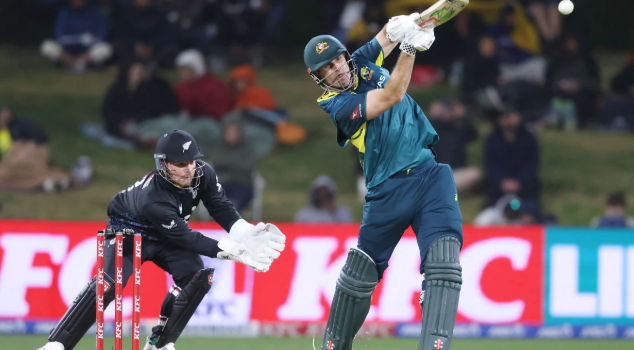
| Oct 4, 2025 | T20I | Bay Oval, Mt Maunganui | NZ 156/9; AUS 160/7 (18 ov) | AUS won by 3 wkts | Marsh’s maiden T20I ton (103*) steals the show. |
| Oct 3, 2025 | T20I | Bay Oval, Mt Maunganui | AUS 16/1 (2.1 ov); Match reduced to 9 ov/side | No result (rain) | Brief play sees Head fall early; weather wins. |
| Oct 1, 2025 | T20I | Bay Oval, Mt Maunganui | NZ 181/6; AUS 185/4 (16.3 ov) | AUS won by 6 wkts | Marsh blasts 85 off 43; Robinson’s 106* in vain. |
| Mar 8-11, 2024 | Test | Hagley Oval, Christchurch | NZ 162 & 372; AUS 256 & 281/7 | AUS won by 3 wkts | Carey’s gritty knock seals series sweep. |
| Feb 29-Mar 3, 2024 | Test | Basin Reserve, Wellington | AUS 383 & 164; NZ 179 & 196 | AUS won by 172 runs | Lyon’s 10-wicket haul crushes Kiwis. |
| Feb 25, 2024 | T20I | Eden Park, Auckland | AUS 118/4 (10.4 ov); NZ 98/3 (10 ov) | AUS won by 27 runs (DLS) | Maxwell’s quick 20; Phillips’ 40* not enough. |
| Feb 23, 2024 | T20I | Eden Park, Auckland | AUS 174; NZ 102 (17 ov) | AUS won by 72 runs | Ferguson’s 4/12; Zampa’s 4/34 demolishes NZ. |
Head-to-Head Summary
| Format | Matches Played | Australia Wins | New Zealand Wins |
|---|---|---|---|
| Test | 62 | 36 | 8 |
| ODI | 142 | 96 | 39 |
| T20I | 22 | 15 | 6 |
Best Player Analysis
| Format | Top Run Scorer (Player, Team) | Key Stats (Runs / Avg / HS) | Top Wicket Taker (Player, Team) | Key Stats (Wickets / Avg / BBI) |
|---|---|---|---|---|
| Test | Ross Taylor (NZ) | 1,704 / 47.33 / 290 | Shane Warne (AUS) | 103 / 25.42 / 8-71 |
| ODI | Ross Taylor (NZ) | 1,903 / 54.37 / 181* | Daniel Vettori (NZ) | 62 / 30.74 / 5-7 |
| T20I | Martin Guptill (NZ) | 463 / 29.00 / 105 | Ish Sodhi (NZ) | 16 / 20.50 / 3-18 |
The Birth of the Trans-Tasman Rivalry
The Australian men’s cricket team vs New Zealand national cricket team match scorecard first came to life in 1946 at Wellington, when New Zealand finally hosted their powerful neighbors in a post war Test. Australia arrived with authority, depth, and the aura of champions. New Zealand arrived with belief and grit. The early scorecards told a clear story. Australia dominated with stronger batting depth and sharper bowling discipline. Yet beneath the numbers, something more important was forming. Crowds sensed that this was not just another bilateral contest. Geography made them neighbors. Cricket made them rivals. Each run scored and wicket taken carried national pride. Those first encounters planted the seed of a rivalry built on respect, competitiveness, and the hunger to close the gap.
| Match | Score | Result | Season | Venue |
|---|---|---|---|---|
| 1st Test | AUS 199 & 199, NZ 42 & 54 | Australia won by innings and 103 runs | 1945–46 | Wellington |
| 2nd Test | AUS 278 & 171, NZ 155 & 87 | Australia won by 207 runs | 1949–50 | Christchurch |
| 3rd Test | AUS 246 & 160, NZ 187 & 130 | Australia won by 89 runs | 1956–57 | Auckland |
| 4th Test | AUS 296 & 221, NZ 235 & 180 | Australia won by 102 runs | 1959–60 | Melbourne |
The 1970s and 1980s Shift
The Australian men’s cricket team vs New Zealand national cricket team match scorecard began to look different in the 1970s and 1980s. No longer was it a one sided affair. New Zealand found steel through Sir Richard Hadlee, whose relentless accuracy troubled even Australia’s strongest batting units. Australia responded with pace and aggression, led by Dennis Lillee and later a rebuilding side searching for consistency. Tight scorecards replaced blowouts. Low scoring Tests in Auckland and Brisbane turned into battles of patience. Every wicket sparked noise from partisan crowds. This was the era when belief shifted. New Zealand stopped competing merely to survive. They played to win. Tactical discipline, sharper fielding, and inspired spells turned the rivalry into a genuine contest built on pressure and pride.
| Match | Score | Result | Season | Venue |
|---|---|---|---|---|
| 1st Test | NZ 333 & 233, AUS 515 & 131/3 | Australia won by 7 wickets | 1973–74 | Auckland |
| 2nd Test | AUS 316 & 204, NZ 307 & 115 | Australia won by 98 runs | 1979–80 | Melbourne |
| 3rd Test | NZ 202 & 195, AUS 179 & 182 | New Zealand won by 2 wickets | 1981–82 | Christchurch |
| 4th Test | NZ 553/7d, AUS 383 & 290 | New Zealand won by 72 runs | 1985–86 | Brisbane |
World Cup Finals and Global Stakes
When the Australian men’s cricket team vs New Zealand national cricket team match scorecard entered the World Cup arena, everything felt heavier. Bilateral pride turned into global pressure. The 2015 final at the Melbourne Cricket Ground remains the most emotional chapter. Australia struck early, dismantling New Zealand’s top order under lights. The chase was clinical, powered by calm finishing and roaring home support. Earlier, group stage thrillers and knockout clashes had already shown how thin the margins were between these neighbors. In World Cups, tactics sharpen. Captains attack sooner. Bowlers hunt breakthroughs harder. Every run echoes worldwide. These scorecards were no longer just numbers. They were moments that defined legacies and shaped how the rivalry would be remembered on cricket’s biggest stage.
| Match | Score | Result | Season | Venue |
|---|---|---|---|---|
| World Cup Group Match | NZ 151, AUS 152/9 | Australia won by 1 wicket | 2014–15 | Auckland |
| World Cup Final | NZ 183, AUS 186/3 | Australia won by 7 wickets | 2014–15 | Melbourne |
| World Cup Group Match | AUS 243/9, NZ 245/5 | New Zealand won by 5 wickets | 2019 | London |
| T20 World Cup Final | NZ 172/4, AUS 173/2 | Australia won by 8 wickets | 2021 | Dubai |
Modern Day Battles and Tactical Evolution
The Australian men’s cricket team vs New Zealand national cricket team match scorecard in the modern era reflects smarter cricket and sharper tactics. Under leaders like Steve Smith and Kane Williamson, the rivalry became a chess match. Data analysis shaped field placements. Bowlers varied pace and lengths more than ever. Batters focused on strike rotation as much as power. Close finishes became common, especially in T20 and ODI contests. Super Overs, last over thrillers, and calculated chases replaced one sided contests. Fitness standards improved, and fielding intensity rose dramatically. Every modern match scorecard shows balanced totals and tight margins. The rivalry today is defined not by domination, but by precision, planning, and nerves under pressure.
| Match | Score | Result | Season | Venue |
|---|---|---|---|---|
| 1st T20I | AUS 208/4, NZ 206/7 | Australia won by 3 runs | 2017–18 | Sydney |
| 1st ODI | AUS 231, NZ 232/4 | New Zealand won by 6 wickets | 2019–20 | Auckland |
| 2nd ODI | NZ 291/9, AUS 292/5 | Australia won by 5 wickets | 2020–21 | Sydney |
| 1st Test | AUS 416 & 168/5d, NZ 166 & 171 | Australia won by 279 runs | 2019–20 | Perth |
Player Records and Statistical Landmarks
The Australian men’s cricket team vs New Zealand national cricket team match scorecard is rich with record breaking feats. Ricky Ponting dominated the 2000s with consistent centuries, while Brendon McCullum redefined aggressive opening in Tests and T20s. Richard Hadlee delivered some of the finest bowling figures in trans Tasman history, troubling even Australia’s strongest lineups. In modern cricket, David Warner produced rapid hundreds that shifted momentum within sessions. From highest team totals to match defining five wicket hauls, statistical landmarks have shaped this rivalry. Each record tells a story of dominance, resilience, and competitive fire that continues to fuel every new encounter.
| Match | Score | Result | Season | Venue |
|---|---|---|---|---|
| 1st Test | AUS 520/9d, NZ 275 & 177 | Australia won by innings and 68 runs | 2004–05 | Brisbane |
| 2nd Test | NZ 553/7d, AUS 383 & 290 | New Zealand won by 72 runs | 1985–86 | Brisbane |
| 3rd ODI | AUS 324/8, NZ 220 | Australia won by 104 runs | 2001–02 | Melbourne |
| 1st Test | NZ 183 & 171, AUS 416 & 168/5d | Australia won by 279 runs | 2019–20 | Perth |
Conclusion
The Australian men’s cricket team vs New Zealand national cricket team match scorecard tells a story of evolution. What began as uneven contests grew into a gripping rivalry defined by narrow margins and global stakes. Icons such as Allan Border, Stephen Fleming, Glenn McGrath and Kane Williamson shaped eras with leadership and skill. Records were broken, finals were won, and heartbreak was shared. Yet through decades of competition, mutual respect remained intact. Today, this rivalry stands as proof that cricket is not just about winning. It is about character, resilience, and moments that fans remember for a lifetime.
Frequently Asked Questions
When did Australia and New Zealand first play each other in Test cricket?
They first met in a Test match in the 1945–46 season in Wellington, marking the beginning of their long standing rivalry.
What is the most famous World Cup match between them?
The 2015 ICC Cricket World Cup Final in Melbourne is widely regarded as the most iconic encounter.
Who has scored the most runs in this rivalry?
Several players have dominated across eras, with Australian and New Zealand captains often leading the run charts in different formats.
Has New Zealand beaten Australia in ICC tournaments?
Yes, New Zealand has secured important victories in World Cup group matches and knockout games over the years.
Why is this rivalry called the Trans Tasman rivalry?
It is named after the Tasman Sea, which separates Australia and New Zealand, symbolizing their geographic closeness and sporting competition.