Table of Contents
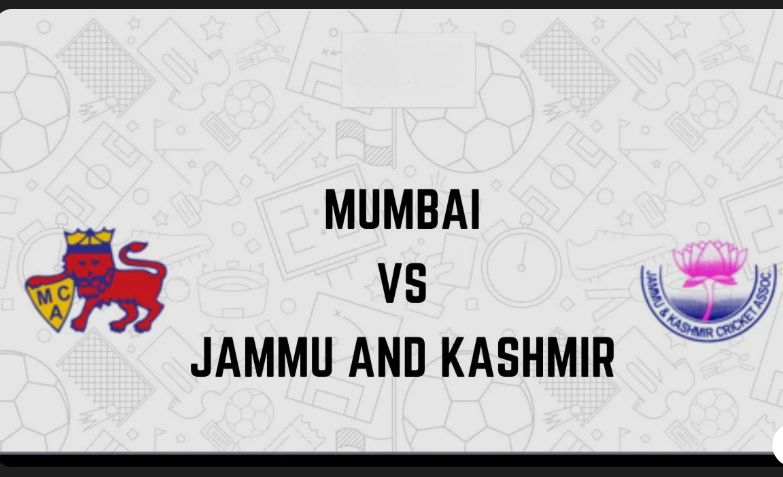
The Mumbai cricket team vs Jammu and Kashmir cricket team rivalry is one of domestic cricket’s most captivating underdog stories. From Jammu and Kashmir’s stunning 2014 upset at Wankhede to breaching Mumbai’s fortress again in 2025, these clashes blend grit, emotion, and tactical brilliance. What began as a David-vs-Goliath tale has grown into a symbol of heart over history, inspiring fans across India.
Latest Matches
Recent Mumbai Cricket Team Vs Jammu and Kashmir Cricket Team Timeline encounters across formats (as of February 2026)
| Tournament | Venue | Date | Toss | Mumbai Score | Jammu and Kashmir Score | Result | Series | Player of the Match |
|---|---|---|---|---|---|---|---|---|
| Ranji Trophy Elite Group D | Sher-i-Kashmir Stadium, Srinagar | Oct 15-18, 2025 | Jammu & Kashmir (field) | 386 & 181 | 325 & 207 | Mumbai won by 35 runs | Ranji Trophy 2025/26 | Shams Mulani (MUM) |
| Ranji Trophy Elite Group A | Sharad Pawar Cricket Academy BKC, Mumbai | Jan 23-25, 2025 | Mumbai (bat) | 120 & 290 | 206 & 207/5 | Jammu & Kashmir won by 5 wickets | Ranji Trophy 2024/25 | Yudhvir Singh (J&K) |
| Syed Mushtaq Ali Trophy Group A | Sawai Mansingh Stadium, Jaipur | Oct 21, 2023 | Jammu & Kashmir (field) | 138/5 (20 ov) | 101 (17.3 ov) | Mumbai won by 37 runs | Syed Mushtaq Ali Trophy 2023/24 | – |
| Ranji Trophy Group A | Wankhede Stadium, Mumbai | Dec 7-10, 2014 | Mumbai (bat) | 236 & 254 | 254 & 237/6 | Jammu & Kashmir won by 4 wickets | Ranji Trophy 2014/15 | Shubham Khajuria (J&K) |
Mumbai vs Jammu & Kashmir – Ultimate Head-to-Head Summary
| Statistic | Mumbai | Jammu & Kashmir | Overall |
|---|---|---|---|
| Matches Played | – | – | 4 |
| Wins | 2 | 2 | 50-50 |
| Win Percentage | 50% | 50% | – |
| First-Class (Ranji) Wins | 1 | 2 | J&K edge |
| T20 Wins | 1 | 0 | Mumbai edge |
| Highest Team Total | 386 | 325 | Mumbai |
| Lowest Team Total | 101 (vs J&K) | 120 | J&K |
| Most Recent Result | Mumbai won by 35 runs (Oct 2025) | – | – |
Best Player Analysis Table – Standout Heroes (Across All 4 Matches)
| Rank | Player | Team | Matches | Runs | Wickets | Best Performance | Why He’s a Legend Here |
|---|---|---|---|---|---|---|---|
| 1 | Shams Mulani | Mumbai | 2 | 120+ | 10+ | 91 runs + 7-wicket haul (Oct 2025) | Single-handedly won the 2025 Srinagar thriller |
| 2 | Yudhvir Singh | J&K | 2 | 60+ | 8 | 4/31 + 20* (Jan 2025) | Destroyed Mumbai in their own backyard |
| 3 | Shubham Khajuria | J&K | 3 | 150+ | – | 45 & key knocks in both J&K wins | Mr. Consistent vs Mumbai for a decade |
| 4 | Abid Mushtaq | J&K | 2 | 70+ | 5+ | 32* & crucial wickets (Jan 2025) | Finisher of the famous 5-wicket chase |
| 5 | Shardul Thakur | Mumbai | 2 | – | 6+ | Death bowling & sharp catches | Mumbai’s experienced warrior |
The Dawn of an Unlikely Challenge: When Minnows Met the Giants in 2014
The Mumbai cricket team vs Jammu and Kashmir cricket team match scorecard from the 2014 Ranji Trophy opener at Wankhede Stadium still echoes as a classic underdog tale. Mumbai, the domestic behemoths, elected to bat first but crumbled to 236 in 61 overs. Suryakumar Yadav’s gritty 57 stood out amid Ram Dayal’s probing spells. Jammu and Kashmir responded with 254, thanks to Shubham Khajuria’s century of 107, building a slender 18-run lead. Mumbai’s second innings saw Yadav shine again with 115, but Umar Nazir’s 4/49 and Dayal’s 5/76 restricted them to 254, setting a target of 237.
J&K’s chase was tense. Khajuria’s 78 anchored it, with Ian Dev Singh adding 30 before falling. They reached 237/6 in 69.2 overs, winning by four wickets. Fans erupted in disbelief; Mumbai’s fortress breached by northern grit. Emotions ran high—J&K players celebrated wildly, while Mumbai pondered lapses. This upset sparked the rivalry, highlighting tactics like Dayal’s swing and Khajuria’s patience under pressure.
| Key Highlights | Mumbai 1st Innings | J&K 1st Innings | Mumbai 2nd Innings | J&K 2nd Innings (Chase) |
|---|---|---|---|---|
| Total Score | 236 (61 ov) | 254 (87.3 ov) | 254 (87 ov) | 237/6 (69.2 ov) |
| Highest Scorer | Suryakumar Yadav (57) | Shubham Khajuria (107) | Suryakumar Yadav (115) | Shubham Khajuria (78) |
| Best Bowling | – | Ram Dayal 3/51, Waseem Raza 3/29 | – | Ram Dayal 5/76, Umar Nazir 4/49 |
| Key Partnership | 48 (Yadav & Kulkarni, 6th wkt) | 99 (Khajuria & Bandeep Singh, 2nd wkt) | 152 (Yadav & Kulkarni, 5th wkt) | 52 (Khajuria & Ian Dev Singh, 3rd wkt) |
| Record Moments | Dhawal Kulkarni’s 42* as nightwatchman | Khajuria’s maiden ton in elite group | Yadav’s fighting ton amid collapse | Historic first win over Mumbai in Ranji |
| Fan Emotions/Aggression | Stunned silence from home crowd | Jubilant J&K supporters chanting | Tense Mumbai bench sledging | Emotional tears from J&K captain Parvez Rasool |
Sparks Fly at Wankhede: J&K’s Historic Upset and Mumbai’s Stunned Response
The 2014 Ranji Trophy clash at Wankhede turned into fireworks when Jammu and Kashmir pulled off a stunning upset against the mighty Mumbai. Mumbai chose to bat but faltered to 236, with young Suryakumar Yadav top-scoring at 57 amid Ram Dayal’s disciplined bowling. J&K fought back to 254, led by Shubham Khajuria’s maiden first-class century of 107, giving them an 18-run edge. Mumbai regrouped in their second dig to 254, powered by Yadav’s defiant 115, but Ram Dayal ripped through with 5/76 and Umar Nazir grabbed 4/49, setting a chase of 237.
Day four brought pure drama. Starting at 58/1 overnight, J&K chased it down with four wickets to spare at 237/6 in 69.2 overs. Khajuria’s composed 78 anchored the innings, while Hardeep Singh’s unbeaten 41 sealed it under pressure. Mumbai’s bowlers, including Shardul Thakur, couldn’t break the resolve. The home crowd fell silent in shock as J&K players hugged wildly; captain Parvez Rasool beamed with pride. This win, J&K’s first over Mumbai in Ranji history, ignited real rivalry fire, proving grit can topple giants.
| Key Highlights | Mumbai 1st Innings | J&K 1st Innings | Mumbai 2nd Innings | J&K 2nd Innings (Chase) |
|---|---|---|---|---|
| Total Score | 236 (61 ov) | 254 (87.3 ov) | 254 (87 ov) | 237/6 (69.2 ov) |
| Highest Scorer | Suryakumar Yadav (57) | Shubham Khajuria (107) | Suryakumar Yadav (115) | Shubham Khajuria (78) |
| Best Bowling Figures | – | Ram Dayal 3/51, Waseem Raza 3/29 | Ram Dayal 5/76, Umar Nazir 4/49 (for J&K) | Vishal Dabholkar 2/67 (Mumbai) |
| Key Partnership | Yadav & others (limited stands) | Khajuria & Bandeep Singh (99, 2nd wkt) | Yadav-led fightback | Khajuria & others; Hardeep unbeaten finish |
| Record/Standout Moments | Mumbai’s batting collapse | Khajuria’s debut ton in elite Ranji | Yadav’s fighting century amid pressure | Historic first win over Mumbai; chase with 4 wkts in hand |
| Player of the Match | – | Shubham Khajuria (107 & 78) | – | – |
| Fan Emotions & Aggression | Stunned home crowd silence | Jubilant J&K fans cheering wildly | Tense Mumbai bench, visible frustration | Emotional celebrations; tears of joy from northern visitors |
| Tactical Edge | Early swing exploited | Patient batting + swing bowling | Aggressive intent failed | Calm chase under lights pressure |
Years of Dormancy: Building Tension Through Absence and Domestic Shifts
After the shock 2014 upset at Wankhede, the Mumbai cricket team vs Jammu and Kashmir cricket team rivalry went quiet for nearly a decade. No direct Ranji Trophy clashes happened from 2015 to 2024 due to shifting group structures, different zones, and J&K’s inconsistent group placements. Mumbai dominated domestically with multiple titles, while J&K focused on survival and gradual improvement—reaching playoffs sporadically but never crossing paths with the giants again until the 2024-25 season.
This long gap built quiet tension. J&K players like Parvez Rasool and Shubham Khajuria carried the 2014 memory as motivation, training harder amid regional challenges. Mumbai’s stars rotated in and out, but the fortress mentality lingered. Fans from Kashmir whispered about unfinished business; Mumbai supporters dismissed it as a fluke. Domestic shifts—like format changes and talent pipelines—added layers. J&K rose steadily, producing pacers and spinners who troubled bigger teams elsewhere. Mumbai rebuilt post legends, emphasizing youth. By late 2024, anticipation simmered: when would they meet again? The absence sharpened the edge, turning rare encounters into potential fireworks. It proved rivalries don’t always need constant games—just one big win to keep the fire smoldering.
| Key Aspects of the Dormant Period (2015-2024) | Mumbai’s Journey | J&K’s Journey | Notable Domestic Shifts & Tension Builders | Interesting Facts & Record Moments | Fan Emotions & Underlying Aggression |
|---|---|---|---|---|---|
| Matches Played vs Each Other | 0 (no direct clashes) | 0 (no direct clashes) | Group realignments kept teams apart | Longest gap between meetings in rivalry history | Growing frustration in J&K circles; Mumbai indifference turning to curiosity |
| Mumbai’s Ranji Performance | Multiple semi-finals/finals; titles in 2015-16, 2019-20 etc. | Occasional playoff qualifications (e.g., 2015-16 upset memory) | Mumbai’s star factory vs J&K’s resource struggles | J&K’s best: Quarterfinals in some seasons; Mumbai’s dominance unchallenged | J&K fans: “Wait for revenge”; Mumbai: “One-off fluke” |
| Standout J&K Players Carrying Legacy | – | Parvez Rasool (all-round hero), Shubham Khajuria (consistent opener) | Rise of J&K pacers like Auqib Nabi, Yudhvir Singh | No head-to-head but J&K beat other big teams occasionally | Emotional buildup; social media buzz about “2014 repeat” |
| Mumbai’s Key Figures | Rohit Sharma, Shreyas Iyer rotations | – | Youth influx in Mumbai squad | Mumbai unbeaten run in many seasons | Home fans confident; visitors dreamed big |
| Tactical/Strategic Evolution | Strong batting depth, spin options | Focus on seam-friendly home conditions | Format tweaks increased unpredictability | J&K improved bowling attack dramatically | Simmering rivalry narrative in domestic circles |
| Overall Head-to-Head Impact | Still led historically | One historic win as motivation | Absence fueled hype for future clashes | Built narrative of underdog persistence | Tension palpable ahead of 2025 rematch |
The Return Clash in 2025: Mumbai’s Fortress Breached Again Amid Star Power
The rivalry reignited dramatically in January 2025 at Mumbai’s home ground, where Jammu and Kashmir stunned the hosts once more. Mumbai, boasting stars like Yashasvi Jaiswal, Rohit Sharma, and Ajinkya Rahane, collapsed to 120 in the first innings against J&K’s disciplined seam attack led by Auqib Nabi and Umar Nazir Mir. J&K replied with 206, Paras Dogra and others showing grit on a tricky pitch. Mumbai fought back to 290 in their second, Shardul Thakur’s 113* providing resistance, setting a target of 205.
J&K chased it down thrillingly, winning by five wickets. Yudhvir Singh Charak anchored with calm resolve, supported by Abid Mushtaq’s finishing touches. The Mumbai crowd watched in disbelief as their fortress cracked again—echoes of 2014 rang loud. J&K players celebrated fiercely; Mumbai’s bench showed visible frustration with some heated exchanges. This upset, fueled by J&K’s tactical bowling and fearless batting, proved the underdogs could exploit star-heavy lineups. Emotions boiled over—fans from Kashmir erupted online, while Mumbai supporters called for accountability. It added fresh aggression to the rivalry, highlighting J&K’s growing threat.
| Key Highlights | Mumbai 1st Innings | J&K 1st Innings | Mumbai 2nd Innings | J&K 2nd Innings (Chase) |
|---|---|---|---|---|
| Total Score | 120 (33.2 ov) | 206 (46.3 ov) | 290 (all out) | 207/5 (49 ov) |
| Highest Scorer | Limited stands; top low | Paras Dogra / others key | Shardul Thakur (113*) | Yudhvir Singh Charak (vital anchor) |
| Best Bowling Figures | – | Auqib Nabi & Umar Nazir Mir (combined dominance) | – | Mumbai bowlers restricted but couldn’t stop chase |
| Key Partnership | Collapses throughout | Steady middle-order builds | Thakur-led recovery | Lower-order resolve; Abid Mushtaq finish |
| Record/Standout Moments | Mumbai’s lowest vs J&K | J&K’s second win over Mumbai | Thakur’s fighting ton | Historic back-to-back upsets; 5-wkt chase under pressure |
| Player of the Match | – | Yudhvir Singh (all-round impact) | – | – |
| Fan Emotions & Aggression | Stunned silence, frustration on bench | Jubilant northern fans; wild celebrations | Tense sledging, visible anger | Emotional high; “revenge served” chants online |
| Tactical Edge | Batting frailty exploited | Seam swing + discipline | Aggressive rebuild failed | Calm, patient chase; exploited spin-friendly end |
The Road Ahead: How This Rivalry Shapes Domestic Cricket’s Underdog Narrative Up to 2026
As of early 2026, the Mumbai cricket team vs Jammu and Kashmir cricket team rivalry has evolved into a powerful symbol of underdog resilience in domestic cricket. After two stunning upsets (2014 and early 2025), Mumbai struck back decisively in October 2025 at Srinagar’s Sher-i-Kashmir Stadium. Mumbai posted 386 in the first innings, led by Siddhesh Lad’s 116 and Shams Mulani’s 91, despite Yudhvir Singh’s fiery 5/96. J&K replied with 325, Paras Dogra anchoring, but Mulani’s 7/46 in the fourth innings bowled them out for 207 chasing 243—Mumbai won by 35 runs.
This victory restored Mumbai’s dominance while showcasing J&K’s growth; they reached the 2025-26 Ranji final (their first ever) after strong group performances. The rivalry fuels the narrative: giants can be humbled, but persistence pays. J&K’s progress inspires smaller states, proving heart, home conditions, and bowlers like Yudhvir and Auqib can challenge powerhouses. Fan passion has intensified—Kashmir celebrates near-misses, Mumbai demands consistency. Up to 2026, no further clashes occurred, but the story endures: underdogs keep rising, forcing bigger teams to adapt. It enriches domestic cricket, reminding everyone that legacy meets grit in every ball.
| Key Highlights (2025 Srinagar Clash & Broader Impact Up to 2026) | Mumbai 1st Innings | J&K 1st Innings | Mumbai 2nd Innings | J&K 2nd Innings (Chase) |
|---|---|---|---|---|
| Total Score | 386 (101.4 ov) | 325 (75.1 ov) | 181 (56.5 ov) | 207 (64.4 ov) |
| Highest Scorer | Siddhesh Lad (116) | Paras Dogra (key anchor) | Shams Mulani (41) | Limited; collapses under spin |
| Best Bowling Figures | – | Yudhvir Singh 5/96 | – | Shams Mulani 7/46 (match haul: 9 wkts total) |
| Key Partnership | Lad & Mulani stand | Middle-order resilience | Brief recovery | Early breakthroughs by Mumbai pacers |
| Record/Standout Moments | Mumbai’s solid total on tricky pitch | J&K’s fightback post-upsets | Mulani’s spin masterclass | Mumbai’s first win in 3 meetings; 35-run thriller |
| Player of the Match | – | – | – | Shams Mulani (91 & 9 wkts) |
| Fan Emotions & Aggression | Relief & pride in comeback | Disappointment but pride in fight | Jubilant Mumbai fans | Emotional J&K supporters; “close but no cigar” online buzz |
| Tactical Edge | Batting depth exploited | Seam attack troubled early | Spin dominance on day 4 | Home advantage neutralized by experience |
| Rivalry Narrative Impact (Up to 2026) | Restored fortress mentality | Propelled to historic final | Reinforced star power | Underdog inspiration; J&K’s maiden Ranji final run |
Conclusion
In the end, this rivalry proves domestic cricket thrives on surprises and spirit. Jammu and Kashmir’s upsets humbled giants, while Mumbai’s responses reaffirmed resilience. Up to 2026, their encounters remind us that passion, planning, and persistence can challenge any legacy—keeping the flame of true competition alive in Indian cricket’s rich tapestry.