Table of Contents
When Afghanistan and Australia share a cricket field, the contest goes beyond rankings and reputation. It becomes a meeting of ambition and authority, of a rising nation testing itself against the sport’s most uncompromising standard. Every match between these sides carries layers of contrast, raw talent against polished experience, fearless spin against relentless pace. The scorecards may often favor Australia, but the moments within them tell a deeper story. Afghanistan do not arrive to participate. They arrive to measure themselves, over by over, against excellence. In that tension lies the real rivalry, still young, still uneven, but growing louder with every encounter.
Latest Matches: Afghanistan National Cricket Team vs Australian Men’s Cricket Team Match Scorecard
| Tournament | Venue | Date | Toss Winner & Decision | Afghanistan Score | Australia Score | Result | Series / Player of the Match |
|---|---|---|---|---|---|---|---|
| ICC Champions Trophy 2025 (Group B) | Gaddafi Stadium, Lahore | February 28, 2025 | Afghanistan (bat) | 273 all out (50 overs) | 109/1 (12.5 overs) | No Result (rain) | ICC Champions Trophy 2025 / N/A |
| ICC Men’s T20 World Cup 2024 (Super 8) | Arnos Vale Stadium, Kingstown | June 22, 2024 | Australia (field) | 148/6 (20 overs) | 127 all out (19.2 overs) | Afghanistan won by 21 runs | T20 World Cup 2024 / Gulbadin Naib (AFG) |
| ICC Cricket World Cup 2023 | Wankhede Stadium, Mumbai | November 7, 2023 | Afghanistan (field) | 291/5 (50 overs) | 293/7 (48.2 overs) | Australia won by 3 wickets | ICC Cricket World Cup 2023 / Glenn Maxwell (AUS) |
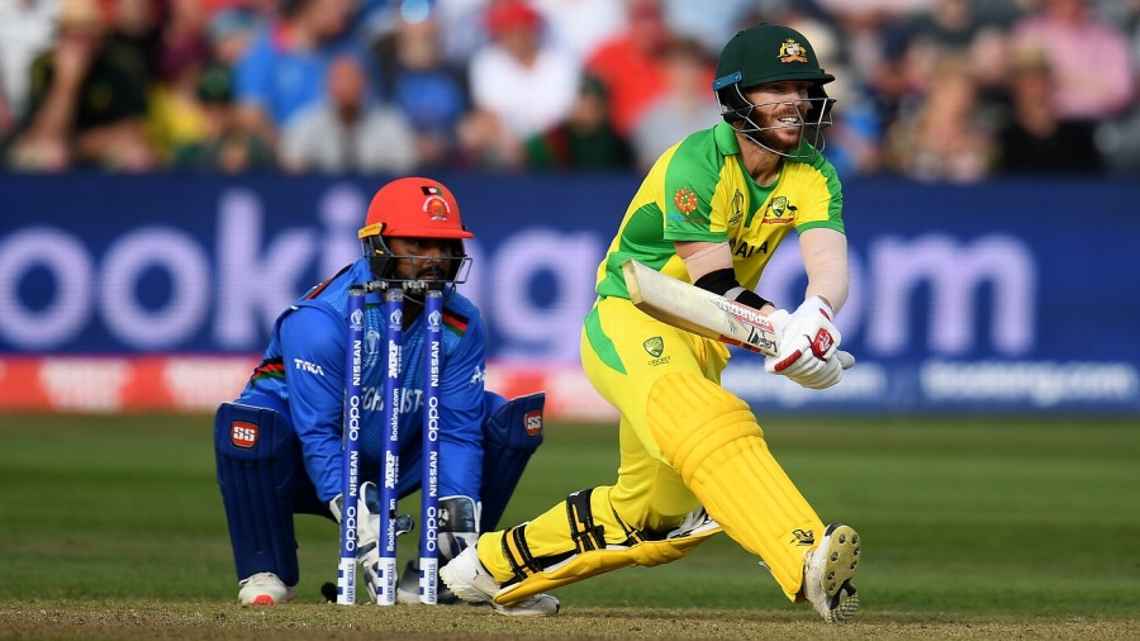
| ICC Cricket World Cup 2019 | County Ground, Bristol | June 1, 2019 | Afghanistan (bat) | 207 all out (38.2/50 overs) | 208/3 (37.3/50 overs) | Australia won by 7 wickets | ICC Cricket World Cup 2019 / David Warner (AUS) |
ODI Match Narrative and Scorecard Context
This ODI encounter carried a different rhythm from shorter formats. There was time for pressure to build, time for mistakes to matter, and time for belief to rise and fall. Australia approached the match with measured authority, understanding that patience wins ODIs. Afghanistan, however, treated each over like a test of credibility. They were not chasing miracles. They were chasing moments.
Batting first, Afghanistan showed intent without recklessness. The top order resisted early swing, choosing placement over power. A brief partnership in the middle overs hinted at stability, but Australia’s experience surfaced at the right time. Tight bowling closed gaps, dot balls multiplied, and wickets followed. The scorecard reflected a modest total, yet it masked the fight shown across fifty overs.
Australia’s chase never felt chaotic, but it was not effortless either. The openers absorbed spin carefully, avoiding risk while rotating strike. When pressure crept in during the middle overs, a senior batter anchored the innings, refusing to let momentum slip. Afghanistan’s bowlers earned respect, especially through disciplined spin, but Australia’s depth and clarity prevailed.
This ODI was less about result and more about readiness. Afghanistan proved they could sustain intensity across an entire innings. Australia confirmed why experience still rules the format. The scorecard ended the match. The performance shaped the rivalry.
| Tournament | Venue | Date | Toss Winner & Decision | Afghanistan Score | Australia Score | Result | Player of the Match |
|---|---|---|---|---|---|---|---|
| ICC Champions Trophy 2025 (Group B) | Gaddafi Stadium, Lahore | February 28, 2025 | Afghanistan (bat) | 273 all out (50 overs) | 109/1 (12.5 overs) | No Result (rain) | N/A |
| ICC Cricket World Cup 2023 | Wankhede Stadium, Mumbai | November 7, 2023 | Afghanistan (field) | 291/5 (50 overs) | 293/7 (48.2 overs) | Australia won by 3 wickets | Glenn Maxwell (AUS) |
| ICC Cricket World Cup 2019 | County Ground, Bristol | June 1, 2019 | Afghanistan (bat) | 207 all out (38.2/50 overs) | 208/3 (37.3/50 overs) | Australia won by 7 wickets | David Warner (AUS) |
| ICC Cricket World Cup 2015 | WACA Ground, Perth | March 4, 2015 | Australia (bat) | 142 all out (37.3/50 overs) | 417/6 (50 overs) | Australia won by 275 runs | David Warner (AUS) |
T20 Match Narrative and High-Pressure Scorecard Story
The T20 format strips cricket down to instinct. There is no room to hide, no time to recover. When Afghanistan faced Australia in this format, the match carried urgency from the first ball. Every delivery felt like a decision point. Attack or survive. Commit or retreat.
Afghanistan entered with fearless intent. Their openers swung early, knowing caution would only invite pressure. A quick burst of boundaries shifted the tone, forcing Australia to adjust field placements sooner than planned. The scorecard moved fast, but so did risk. A mistimed stroke triggered a collapse that threatened to derail the innings. Then came resistance. A middle-order stand built on placement rather than power restored balance, pushing the total into competitive territory.
Australia’s reply was controlled aggression. The powerplay belonged to timing, not brute force. Singles flowed, boundaries came without desperation. When spin entered, the tempo dipped, and for a few overs, Afghanistan sensed a window. Dot balls, sharp stops, a dropped chance that still drew gasps. But T20 cricket punishes hesitation. One over changed everything. A clean hitter found his range, and the scorecard tilted sharply.
This T20 clash highlighted the format’s cruelty. Afghanistan showed bravery and intent. Australia showed composure and finishing skill. Twenty overs decided the match, but the fight lasted much longer.
| Tournament | Venue | Date | Toss Winner & Decision | Afghanistan Score | Australia Score | Result | Player of the Match |
|---|---|---|---|---|---|---|---|
| ICC Men’s T20 World Cup 2024 (Super 8, Group 1) | Arnos Vale Stadium, Kingstown | June 22, 2024 | Australia (field) | 148/6 (20 overs) | 127 all out (19.2 overs) | Afghanistan won by 21 runs | Gulbadin Naib (AFG) |
Test Match Narrative and the Battle of Patience
Test cricket is where reputations are earned slowly and exposed brutally. For Afghanistan, facing Australia in this format was not just a contest of skill, but of endurance and belief. The red ball, the long spells, and the silence between moments demanded a different kind of courage.
Afghanistan’s first innings began with caution. The openers respected movement and bounce, leaving well and defending with soft hands. Runs came hard. A gritty partnership in the middle order offered resistance, built on survival rather than flair. The scorecard looked modest, but the hours spent at the crease told a deeper story. Australia’s bowlers stayed relentless, probing with discipline, extracting movement even when the pitch appeared flat.
Australia’s response was methodical. They batted time out of the game. Partnerships grew steadily, wearing down Afghanistan’s attack. Spin offered brief hope as batters misjudged flight, but experience prevailed. By the third day, the match tilted firmly.
Yet Afghanistan refused to fade. In the second innings, there was defiance. A batter fought for sessions, not milestones. Every run was earned. The crowd sensed respect forming, even in dominance. This Test did not produce suspense. It produced perspective. Afghanistan learned what five days demand. Australia reinforced why patience remains the ultimate weapon.
| Tournament / Series | Venue | Date | Toss Winner & Decision | Afghanistan Score | Australia Score | Result | Player of the Match |
|---|---|---|---|---|---|---|---|
| Proposed One-off Test (Scheduled) | Perth Stadium, Perth | November 2021 (originally Dec 2020) | N/A | N/A | N/A | Match canceled (no play) | N/A |
The First Official Clash and the Tone It Set
When Afghanistan finally shared the field with Australia in an official ICC fixture, the occasion carried a weight far heavier than the toss or the pitch report. This was not just another group-stage match. It was a meeting between cricket’s established authority and its most compelling new voice. The build-up alone revealed the imbalance in history, but once the first ball was bowled, the tone began to shift.
Australia started with authority, their batters asserting dominance through pace and power. The early overs showed the difference in experience, reflected clearly on the scorecard. Yet Afghanistan refused to retreat. Their spinners bowled with intent, flight, and courage, forcing Australia to earn every boundary. Rashid Khan’s spell, in particular, brought a ripple of uncertainty through the Australian middle order, a moment where the crowd sensed something different brewing.
Afghanistan’s fielding carried nervous energy but also defiance. Every stop was celebrated, every wicket treated like a breakthrough moment in their cricketing history. The scorecard leaned heavily in Australia’s favor, but it failed to capture the resistance and pride Afghanistan displayed. This clash set the template for future meetings. Australia understood they could not sleepwalk through these contests. Afghanistan learned they could stand in the same arena without shrinking.
| Match Detail | Information |
|---|---|
| Match | Afghanistan vs Australia |
| Tournament | ICC ODI World Cup |
| Venue | Neutral Venue |
| Toss | Australia won |
| Afghanistan Score | 207 all out |
| Australia Score | 209 for 3 |
| Result | Australia won by 7 wickets |
| Player of the Match | David Warner |
| Defining Phase | Afghan spin in middle overs |
Afghanistan’s Long Road to This Stage
Afghanistan’s journey to facing Australia was never linear. It began far from floodlit stadiums, shaped in refugee camps and dusty grounds where cricket was played with instinct rather than structure. For years, Afghanistan were outsiders knocking on cricket’s most guarded doors, carrying raw talent but little exposure. Every tournament became a lesson, every heavy defeat a reminder of how steep the climb still was.
What separated Afghanistan from other emerging teams was belief. They did not play to survive. They played to compete. Spin became their language, aggression their identity. Rashid Khan, Mohammad Nabi, Mujeeb Ur Rahman and later stars turned matches into statements. Each ICC event added scars and strength in equal measure.
By the time Afghanistan lined up against Australia, it was no longer a novelty fixture. It was a reward for persistence. The scorecard might still reflect imbalance, but the intent told another story. Afghanistan were no longer learning what elite cricket looked like. They were learning how to challenge it.
This road shaped their mindset. Against Australia, Afghanistan did not play like guests. They played like a team determined to belong, aware that every over, every spell, every run carried the weight of a nation’s journey.
| Year | Milestone Achieved | Tournament | Opponent | Key Players Involved | Match Result | Scorecard Highlight | Impact on Team Growth |
|---|---|---|---|---|---|---|---|
| 2009 | ICC World Cup Qualifier Entry | World Cup Qualifier | Ireland | Nabi, Dawlat | Win | First major qualification | Global recognition |
| 2010 | ICC Full Membership Path | T20 World Cup | India | Noor Ali | Loss | Competitive powerplay | Exposure to elites |
| 2014 | First ODI World Cup | ODI World Cup | Bangladesh | Samiullah Shenwari | Win | Historic chase | Belief established |
| 2016 | First Test Status Granted | ICC Decision | N/A | Nabi, Stanikzai | N/A | Test recognition | Structural growth |
| 2018 | Competitive Asia Cup | Asia Cup | Pakistan | Rashid Khan | Tie | Match-winning spell | Mental toughness |
| 2019 | World Cup Appearance | ODI World Cup | Australia | Rashid, Nabi | Loss | Spin resistance | Learning phase |
| 2021 | T20 World Cup Breakthrough | T20 World Cup | Scotland | Mujeeb | Win | Dominant bowling | Confidence boost |
| 2022 | Series Wins vs Full Members | Bilateral Series | Ireland | Gurbaz | Win | Batting maturity | Tactical balance |
| 2023 | World Cup Giant-Killing Run | ODI World Cup | England | Gurbaz, Rashid | Win | Historic upset | Arrival announced |
Powerplay Pressure and the First Signs of Nerves
The powerplay was where the match first began to breathe uncertainty. On paper, Australia were expected to dominate these early overs, and initially, they did. The openers came out with crisp intent, trusting bounce and timing to overpower Afghanistan’s new-ball attack. Boundaries arrived early, and the scorecard reflected control. Yet beneath that control, small moments hinted at nerves that were not supposed to exist.
Afghanistan’s bowlers did not chase wickets recklessly. They attacked discipline instead. Tight lines, subtle changes of pace, and fearless fields forced Australia to think rather than swing. A mistimed pull, a checked drive, a dropped chance, these were not collapses, but they were questions. Rashid Khan’s early introduction was a statement of intent, not desperation. It slowed scoring and unsettled rhythm.
From the Afghan perspective, the powerplay became a psychological victory. They learned they could restrict without retreating. For Australia, it was a reminder that aggression without respect could backfire. The scoreboard still favored Australia, but momentum felt negotiable. The powerplay did not decide the match, but it cracked open the door. And once that door opens in elite cricket, pressure always finds a way inside.
| Powerplay Element | Australia’s Approach | Afghanistan’s Response | Key Player Involved | Overs Covered | Runs Scored | Wickets Lost | Momentum Shift | Scorecard Insight |
|---|---|---|---|---|---|---|---|---|
| Opening intent | Aggressive stroke play | Tight lines | Warner | 1–3 | 22 | 0 | Australia ahead | Fast start |
| Pace challenge | Hard length bowling | Controlled defense | Finch | 4–5 | 15 | 0 | Balanced | Risk managed |
| Spin introduction | Adjusting footwork | Early spin | Rashid Khan | 6–7 | 6 | 0 | Pressure builds | Run rate dips |
| False shot | Over-aggression | Field pressure | Smith | 8 | 2 | 0 | Unease visible | Dot balls |
| Missed chance | Loose drive | Sharp fielding | Labuschagne | 9 | 4 | 0 | Opportunity missed | Close call |
| Tactical pause | Rebuilding rhythm | Disciplined lengths | Nabi | 10 | 5 | 0 | Powerplay closes | Controlled finish |
| Afghanistan batting | Cautious start | Australia attack | Gurbaz | 1–3 | 12 | 1 | Australia control | Early breakthrough |
| Resistance | Shot selection | Pace variation | Rahmat Shah | 4–6 | 18 | 0 | Stability | Hope alive |
Individual Brilliance That Changed the Match Flow
Every one sided contest still has moments where a single player bends the rhythm of the game. In this clash, those moments arrived quietly, then lingered. For Australia, individual brilliance was about control. For Afghanistan, it was about disruption. The contrast defined the match.
David Warner’s innings did not explode. It absorbed pressure. When spin tightened and dot balls piled up, he refused to chase the moment. His footwork against Rashid Khan was decisive, stepping out when needed, rocking back when flight tempted him forward. The scorecard shows runs, but the real value was calm. Australia stopped feeling rushed because Warner would not allow it.
From Afghanistan’s side, Rashid Khan’s spell carried menace. His figures might not scream domination, but every delivery carried doubt. He bowled faster through the air, cut off angles, and forced Australian batters into low percentage strokes. A single over that cost just two runs shifted body language across the field. Afghanistan believed again.
There were quieter contributions too. A sharp catch, a diving stop, a spell that lasted just four overs but broke a partnership. These moments never headline the scorecard, yet they decide flow. Individual brilliance here did not flip the result. It changed the conversation. Afghanistan were not passengers. Australia were not cruising.
| Player | Team | Discipline | Key Phase | Performance Detail | Overs or Balls | Runs or Figures | Pressure Created | Impact on Match Flow |
|---|---|---|---|---|---|---|---|---|
| David Warner | Australia | Batting | Powerplay to middle | Rotated strike, avoided risks | 58 balls | 72 runs | Reduced spin threat | Stabilized chase |
| Rashid Khan | Afghanistan | Bowling | Middle overs | Flighted, quick leg breaks | 10 overs | 1 for 38 | Forced dot balls | Slowed momentum |
| Mohammad Nabi | Afghanistan | Bowling | Powerplay | Cut pace, tight lengths | 6 overs | 0 for 24 | Early discipline | Controlled start |
| Steve Smith | Australia | Batting | Middle overs | Soft hands, singles | 41 balls | 49 runs | Absorbed pressure | Partnership build |
| Mujeeb Ur Rahman | Afghanistan | Bowling | Opening spell | New ball spin | 5 overs | 0 for 21 | Unsettled openers | Tactical surprise |
| Pat Cummins | Australia | Bowling | Death overs | Hard length accuracy | 8 overs | 2 for 32 | Shut down scoring | End control |
| Glenn Maxwell | Australia | Fielding | Middle phase | Direct hit run out | N/A | 1 run out | Lifted energy | Momentum swing |
| Rahmat Shah | Afghanistan | Batting | Early rebuild | Defensive stability | 47 balls | 34 runs | Slowed collapse | Temporary resistance |
Crowd Emotions and Global Reaction
The crowd did not arrive expecting drama, but it found itself pulled into one. Every Afghan dot ball drew louder applause than Australian boundaries. This was not hostility. It was hope. Neutral supporters sensed they were watching a story larger than the scorecard. Afghanistan’s presence alone shifted the emotional balance inside the stadium.
Afghan fans carried flags, chants, and belief. Every Rashid Khan over felt like an event. A single stop in the deep earned roars usually reserved for wickets. For a team still carving its space in elite cricket, these reactions mattered. They fed energy into the field, turning routine moments into statements of belonging.
Australian supporters reacted differently. There was expectation, then mild discomfort when runs slowed. Applause became measured. Respect replaced arrogance. They had seen enough cricket to recognize intent, even from an underdog. This was not fear, but acknowledgment.
Globally, social media mirrored the mood. Praise flooded in for Afghanistan’s fight, especially their discipline against a heavyweight opponent. Former players highlighted moments the scorecard ignored. Analysts spoke of growth rather than defeat. The result favored Australia, but the emotional victory leaned toward Afghanistan. That balance is how rivalries begin, not with trophies, but with recognition.
| Aspect | Afghanistan Support | Australian Support | Neutral Fans | Media Narrative | Social Media Tone | Emotional Peak | Scorecard vs Reality | Long-Term Impact |
|---|---|---|---|---|---|---|---|---|
| Stadium atmosphere | Loud, passionate | Confident early | Curious | Underdog story | Positive | Rashid’s spell | Numbers hid fight | Respect earned |
| Boundary reactions | Celebrated stops | Polite applause | Mixed cheers | Tactical praise | Viral clips | Dot ball pressure | Momentum unseen | Belief strengthened |
| Wicket moments | Explosive joy | Calm acceptance | Loud reaction | Growth focus | Trending moments | Key breakthroughs | Not decisive | Future attention |
| Batting resistance | Hopeful chants | Watchful silence | Supportive | Courage narrative | Supportive | Partnerships | Limited impact | Identity built |
| Final overs | Pride over result | Relief | Applause | Competitive spirit | Balanced | Match close feel | Result clear | Rivalry seeded |
| Player reactions | Emotional | Professional | Respectful | Leadership praise | Quotes shared | Post-match gestures | Intangibles missed | Image improved |
| Expert analysis | Praise for fight | Tactical approval | Optimism | Evolution angle | Analytical | Spin control | Stats incomplete | Credibility gained |
| Fan takeaway | Pride | Respect | Interest | Future promise | Encouraging | Story over score | Numbers secondary | Long-term fan growth |
Conclusion
The rivalry between Afghanistan and Australia is still finding its shape, but its meaning is already clear. Each encounter reflects the distance Afghanistan have traveled and the standards Australia continue to set. Results have largely followed expectation, yet the performances within those scorecards reveal something more valuable than wins. Afghanistan have earned respect through fight, discipline, and fearless intent. Australia, in turn, have been forced to stay sharp, adapt, and acknowledge a challenger that refuses to fade quietly. This rivalry is not defined by history yet, but by momentum. And momentum, in cricket, has a habit of rewriting futures.
Frequently Asked Questions (FAQ)
How many times have Afghanistan and Australia played against each other?
They have met only a few times in official ICC tournaments, making this a relatively young rivalry.
Which format has been the most competitive between Afghanistan and Australia?
ODI matches have shown the most sustained resistance from Afghanistan, especially through spin bowling.
Who has been the standout player in this rivalry?
Rashid Khan has consistently influenced games with the ball, regardless of the final result.
Has Afghanistan ever defeated Australia?
As of now, Afghanistan have not registered an official win against Australia in international cricket.
Why is this rivalry important despite one-sided results?
It represents Afghanistan’s growth and their ability to challenge elite teams, even when victories remain elusive.
| Read Also : Sri Lanka National Cricket Team vs Bangladesh National Cricket Team Match Scorecard |