Table of Contents
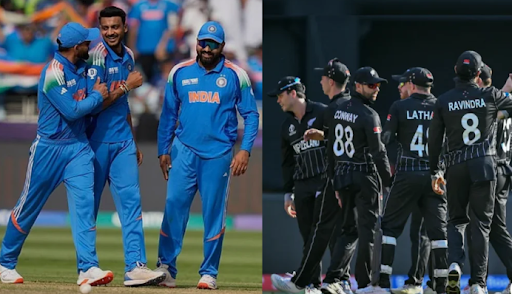
Few modern cricket rivalries are as quietly intense as India versus New Zealand. What began as a respectful contest evolved into a multi-format drama shaped by ICC knockouts, swinging mornings, spinning afternoons, and high-pressure chases. Scorecards tell a story of contrasting cricketing cultures: India built around batting depth, star power, and home dominance, New Zealand armed with discipline, seam mastery, and tactical patience. Every meeting now carries a psychological thread, especially in tournaments where margins shrink and reputations stretch. The rivalry has no villains, yet it has consequences, and each chapter feels unfinished enough to invite the next.
Latest Matches: India National Cricket Team vs New Zealand National Cricket Team Match Scorecard
| Tournament | Venue | Date | Toss | India Score | New Zealand Score | Result | Series | Player of the Match |
|---|---|---|---|---|---|---|---|---|
| Bilateral ODI | Holkar Cricket Stadium, Indore | Jan 18, 2026 | India (bowl) | 296 (46) | 337/8 (50) | New Zealand won by 41 runs | New Zealand in India 3 ODI Series 2026 | Daryl Mitchell (NZ) – 137 (131) |
| Bilateral ODI | Niranjan Shah Stadium, Rajkot | Jan 14, 2026 | New Zealand (field) | 284/7 (50) | 286/3 (47.3) | New Zealand won by 7 wickets | New Zealand in India 3 ODI Series 2026 | Daryl Mitchell (NZ) – Scored a match-winning ton in a clinical chase |
| Bilateral ODI | Reliance Stadium, Vadodara | Jan 11, 2026 | Not available | 306/6 (49) | 300/8 (50) | India won by 4 wickets | New Zealand in India 3 ODI Series 2026 | Not available |
| ICC ODI | Dubai International Cricket Stadium, Dubai | Mar 9, 2025 | New Zealand (bat) | 254/6 (49) | 251/7 (50) | India won by 4 wickets | ICC Champions Trophy 2025 Final | Not available – Tense finish with India holding nerves in the chase |
| ICC ODI | Dubai International Cricket Stadium, Dubai | Mar 2, 2025 | New Zealand (field) | 249/9 (50) | 205 (45.3) | India won by 44 runs | ICC Champions Trophy 2025 Group A | Varun Chakravarthy (IND) – Mystery spin bamboozled NZ batsmen |
| Bilateral Test | Wankhede Stadium, Mumbai | Nov 1-3, 2024 | New Zealand (bat) | 263 & 121 | 235 & 174 | New Zealand won by 25 runs | New Zealand in India 3 Test Series 2024 | Ajaz Patel (NZ) – 10-wicket haul sealed the whitewash |
| Bilateral Test | Maharashtra Cricket Association Stadium, Pune | Oct 24-26, 2024 | New Zealand (bat) | 156 & 245 | 259 & 255 | New Zealand won by 113 runs | New Zealand in India 3 Test Series 2024 | Mitchell Santner (NZ) – 13 wickets in the match spun India out |
| Bilateral Test | M. Chinnaswamy Stadium, Bengaluru | Oct 16-20, 2024 | India (bat) | 46 & 462 | 402 & 110/2 | New Zealand won by 8 wickets | New Zealand in India 3 Test Series 2024 | Rachin Ravindra (NZ) – Century in each innings; India’s 46 all out was their lowest home total ever |
| ICC ODI | Wankhede Stadium, Mumbai | Nov 15, 2023 | India (bat) | 397/4 (50) | 327 (48.5) | India won by 70 runs | ICC Cricket World Cup 2023 Semi-Final | Mohammed Shami (IND) – 7/57, best figures in a WC knockout |
| ICC ODI | Himachal Pradesh Cricket Association Stadium, Dharamsala | Oct 22, 2023 | New Zealand (bat) | 274/6 (48) | 273 (50) | India won by 4 wickets | ICC Cricket World Cup 2023 League Stage | Virat Kohli (IND) – Anchored chase with unbeaten 95 |
| Bilateral T20I | Narendra Modi Stadium, Ahmedabad | Feb 1, 2023 | India (bat) | 234/4 (20) | 66 (12.1) | India won by 168 runs | New Zealand in India 3 T20I Series 2023 | Shubman Gill (IND) – 126* off 63, India’s biggest T20I win margin |
| Bilateral T20I | Bharat Ratna Shri Atal Bihari Vajpayee Ekana Cricket Stadium, Lucknow | Jan 29, 2023 | New Zealand (field) | 101/4 (19.5) | 99/8 (20) | India won by 6 wickets | New Zealand in India 3 T20I Series 2023 | Suryakumar Yadav (IND) – Calm finishing under pressure |
| Bilateral T20I | JSCA International Stadium Complex, Ranchi | Jan 27, 2023 | New Zealand (bat) | 155/9 (20) | 176/6 (20) | New Zealand won by 21 runs | New Zealand in India 3 T20I Series 2023 | Daryl Mitchell (NZ) – All-round show |
| Bilateral ODI | Holkar Cricket Stadium, Indore | Jan 24, 2023 | India (bat) | 385/9 (50) | 295 (41.2) | India won by 90 runs | New Zealand in India 3 ODI Series 2023 | Shardul Thakur (IND) – 3 wickets and quick runs |
| Bilateral ODI | Shaheed Veer Narayan Singh International Stadium, Raipur | Jan 21, 2023 | India (bowl) | 111/2 (20.1) | 108 (34.3) | India won by 8 wickets | New Zealand in India 3 ODI Series 2023 | Mohammed Shami (IND) – 3/18, skittled NZ for low total |
The Roots of a Quiet but Sharp Cricket Rivalry
For years, the India National Cricket Team vs New Zealand National Cricket Team match scorecard rarely dominated global headlines the way India vs Australia or India vs Pakistan did. Yet for the fans who stayed long enough to track the shifts, something intriguing was brewing. New Zealand became a tactical riddle for India, especially in tournaments and away tours, while India’s home conditions slowly tightened the noose on visiting Kiwi batters.
Even in the earliest meetings, both teams gravitated towards patient cricket driven by seam, swing, and well-timed counterattacks. It never looked flashy, but it was compelling in a quiet, intellectual way. Tactical awareness was high, bowlers shaped outcomes, and key top-order players controlled tempo. As ODI cricket grew, the contests gained sharper emotional edges, and in T20Is the rivalry suddenly became faster and more volatile. The narrative shifted from merely competitive to genuinely consequential once ICC events started pushing both sides into high-pressure slots. Fans began to notice how the scorecards oscillated in unpredictable patterns, and how small partnerships or breakthroughs created ripples felt across entire series. What looked subtle in the beginning slowly evolved into a rivalry defined by tournaments, knockout ghosts, and technical problem solving.
| Year | Format | Venue | Final Score | Winning Team | Best Performance | Match Story Highlights | Player Notes | Series/Tournament Context |
|---|---|---|---|---|---|---|---|---|
| 1980 | Test | Wellington | NZ 250 and 181, IND 223 and 110 | New Zealand | Hadlee 7 wickets match | Early seam and swing dominance | India struggled against movement | First phase of rivalry pattern formation |
| 1995 | ODI | Christchurch | IND 269 6, NZ 215 all out | India | Tendulkar 82 | India set a firm chase-protecting total | Tendulkar mastery in ODI rise | Middle era rivalry building |
| 2003 | ODI | Centurion | IND 146 all out, NZ 147 4 | New Zealand | Fleming 53 | Low scoring thriller in World Cup | India failed to adapt to seam | Early ICC tension signals |
| 2016 | T20I | Nagpur | IND 79 all out, NZ 126 7 | New Zealand | Santner 4 wickets | Spin trap stunned India in WT20 | India undone by left-arm spin | Tactical rivalry kicks into T20 gear |
| 2019 | ODI | Manchester | IND 221 all out, NZ 239 8 | New Zealand | Williamson 67 | Tense World Cup semifinal | Dhoni runout haunted fans | Defines the modern ICC narrative |
| 2021 | Test | Southampton | NZ 140 2 chasing 139 | New Zealand | Jamieson 7 match wickets | WTC Final pressure match | Williamson calm under fire | Tournament rivalry peaks |
| 2023 | ODI | Dharamsala | IND 274 6, NZ 273 all out | India | Kohli 95 | World Cup league stage chase | India finally cracked NZ in tournament | Narrative balance shifts |
| 2024 | T20I | Hamilton | NZ 171 6, IND 173 5 | India | Gill 72 | Calm chase at death overs | India young core steps up | Signals modern era transition |
Early Encounters and the First Scorecards That Set the Tone
When India and New Zealand began playing regularly in the Test and ODI landscape, it was never just about who held bigger superstars. The rivalry formed around cricketing problem solving. New Zealand leaned on discipline, seam movement, and smart field placements. India relied on technical patience, wristwork, and long batting spells.
The early chapters did not carry the roar of modern T20 crowds, but they carried knowledge. Every wicket was earned, every session mattered. Fans in that era followed scorecards as if deciphering tactics. In New Zealand, the ball jagged off the surface and Indian batters learned the hard way about judgment outside off stump. In India, visitors were smothered by spin and the draining humidity that drained both stamina and shot selection. Slowly, formats multiplied, and with ODIs becoming mainstream in the 90s, scorecards between the two sides started highlighting key performers who would later define bigger chapters. These early matches laid the tactical groundwork for the rivalry: seamers set traps, spinners dictated tempo, captains preferred safety first, and the battles felt longer even when the matches were short. The seeds of tournament friction were planted much earlier than fans remember.
| Year | Format | Venue | Final Score | Winning Team | Best Performance | Match Narrative | Player Notes | Rivalry Takeaway |
|---|---|---|---|---|---|---|---|---|
| 1976 | Test | Auckland | IND 414 8d, NZ 266 and 215 | India | Viswanath 112 | India batted long and dictated tempo | Indian batting resilience | First signs of tempo control |
| 1981 | Test | Mumbai | NZ 331 and 206, IND 281 and 258 5 | India | Gavaskar 90 | Home advantage through spin and patience | Gavaskar grind classic | India builds home blueprint |
| 1986 | ODI | Hyderabad | NZ 187 all out, IND 191 4 | India | Kapil Dev 3 wkts | India chased slowly but securely | Kapil multi role | ODI rivalry gathers shape |
| 1990 | Test | Wellington | NZ 459, IND 276 and 245 | New Zealand | Crowe 147 | New Zealand used pace and bounce | India struggled vs lift | Away challenge becomes a theme |
| 1994 | ODI | Jaipur | IND 260 5, NZ 221 all out | India | Azharuddin 95 | Fluent strokeplay and fielding edge | India improves ODI polish | Middle order evolution |
| 1998 | ODI | Sharjah | NZ 248 6, IND 249 7 | India | Tendulkar 78 | Sharjah tactical chase era | Tendulkar anchor role | Rivalry becomes more aggressive |
Rising Stakes in ODIs and World Cup Crossroads
India National Cricket Team vs New Zealand National Cricket Team matches shifted into a completely new gear once the ICC tournaments and ODI pressure moments became intertwined with the rivalry. Suddenly, every semifinal, every league match, and every knockout could rewrite narratives fans had held for years.
New Zealand thrived on tactical patience, particularly in ODI tournaments. They squeezed runs in the middle overs, bowled dry spells, and forced India to chase totals without comfort. India, meanwhile, leaned on their top order and bowling resurgence but found that New Zealand demanded something more: adaptability in neutral conditions. Fans watched scorecards from World Cup matches as if decoding a mystery. Runs mattered, strike rates mattered, partnerships mattered, and every misfield could hurt a dream.
The 2019 semifinal in Manchester tilted the rivalry into modern folklore. It was a low scoring, slow burning ODI that stayed etched in memory for Dhoni’s calm, Williamson’s poise, and New Zealand’s unshakable nerves. Earlier World Cup meetings had hinted at tournament tension, but 2019 cemented it. From that stage onward, ODI rivalry moments were measured not just in scores, but in heartbreak and relief.
| Year | Format | Venue | Final Score | Winning Team | Best Performance | Pressure Moments | Player Notes | ICC or Series Significance |
|---|---|---|---|---|---|---|---|---|
| 1999 | ODI WC | Nottingham | NZ 251 6, IND 230 all out | New Zealand | Astle 51 | India struggled vs disciplined pace | Dravid lone fight | First major World Cup marker |
| 2003 | ODI WC | Centurion | NZ 147 4 chasing 146 | New Zealand | Fleming 53 | Low scoring thriller | Seam movement decisive | Neutral surface pain for India |
| 2015 | ODI | Hamilton | NZ 292 7, IND 278 9 | New Zealand | Williamson 97 | India failed at finishing stage | Lower order lacked punch | Bilateral pressure rehearsal |
| 2017 | ODI | Pune | IND 281 6, NZ 230 all out | India | Kohli 121 | India controlled chase tempo | Wrist spin chokehold | Tactical ODI rebuild era |
| 2019 | ODI WC SF | Manchester | NZ 239 8, IND 221 all out | New Zealand | Williamson 67 | Dhoni runout moment of heartbreak | Top order collapse costly | Defines modern ICC rivalry |
| 2023 | ODI WC | Dharamsala | NZ 273 all out, IND 274 6 | India | Kohli 95 | Calm chase in mountain air | India cracked Kiwi puzzle | Tournament narrative shifts |
| 2024 | ODI | Rajkot | IND 308 5, NZ 271 all out | India | Gill 112 | Middle overs acceleration | Young batters step up | Bilateral rivalry refresh |
T20I Clashes and the Fast-Track Tactical Era
If ODIs revealed the rivalry’s patience, T20 cricket exposed its restlessness. The India National Cricket Team vs New Zealand National Cricket Team match scorecard in T20Is often became a chemistry test of intent, execution, and matchups. New Zealand entered the format with a clear tactical blueprint. Their bowlers bowled hard lengths, took pace off, and targeted boundary dimensions. Their batters rotated strike against spin and punished errors. India, meanwhile, spent the early years of T20 figuring out tempo. When to explode. When to consolidate. When to gamble.
Fans sensed volatility. Super overs, last over finishes, and slow builds into explosive powerplays became common. New Zealand beat India in early WT20 fixtures by keeping things simple under pressure. India counter-punched in later bilateral series through stronger death bowling and better middle over batting. A rivalry that once felt methodical now looked like a duel of instincts.
The T20 phase also introduced new characters to the rivalry script. Players like Gill, Conway, Phillips, Santner, and Hardik Prabhu became agents of tempo and matchup control. It became clear that T20Is accelerated the rivalry’s modern chapter, turning scorecards into stress tests rather than spreadsheets.
| Year | Format | Venue | Final Score | Winning Team | Best Performance | Tactical Theme | Player Notes | Rivalry Takeaway |
|---|---|---|---|---|---|---|---|---|
| 2007 | T20 WC | Johannesburg | NZ 190 5, IND 180 9 | New Zealand | Styris 89 | Boundary control and strike rotation | India lacked T20 identity | T20 rivalry introduced |
| 2012 | T20I | Chennai | NZ 169 6, IND 167 5 | New Zealand | McCullum 91 | Death overs execution | India short in chase | Kiwi calm in chaos |
| 2017 | T20I | Delhi | IND 202 3, NZ 149 8 | India | Rohit 80 | Powerplay acceleration | India set T20 rhythm | Home adaptation improves |
| 2019 | T20I | Hamilton | NZ 158 3, IND 156 2 (Super Over) | New Zealand | Southee key | Super Over composure | India struggle in finish | Fine margins emerge |
| 2021 | T20 WC | Dubai | NZ 111 2 chasing 110 | New Zealand | Boult 3 wkts | Powerplay chokehold | India stifled early | Tournament blueprint repeat |
| 2023 | T20I | Lucknow | IND 101 4 chasing 99 | India | Suryakumar 26 | Spin-heavy defense | Low scoring drama | India win without flair |
| 2024 | T20I | Hamilton | IND 173 5 chasing 171 | India | Gill 72 | Calculated chase | India new order settles | Modern rivalry balance |
Champions Trophy, WTC and Tournament Knockout Shadow
Tournament cricket magnified the India National Cricket Team vs New Zealand National Cricket Team rivalry. What once felt like a bilateral chess match suddenly became a psychological duel inside ICC corridors. Every Champions Trophy meeting, every World Cup league match, and most notably the World Test Championship final carried an added layer of meaning. Tournaments shortened patience, tightened margins, and elevated individual performances into cultural memory.
New Zealand built a reputation for handling neutral surfaces with ice-cold clarity. India brought star power and bowling depth but often found the first ten overs decisive. Fans noticed how the rivalry produced very few blowouts. Instead, it produced slow-burners, comebacks, collapses, and tactical squeezes. The WTC final in 2021 became the rivalry’s modern signature: a pressure match where Jamieson’s discipline and Williamson’s serenity defined the outcome. India recalibrated in later cycles, strengthening seam reserves and sharpening batting intent against movement.
By 2023 and 2024, tournament meetings carried a question rather than a prediction: could India finally tilt the narrative at the big stage, or would New Zealand’s psychological edge persist? Scorecards no longer recorded runs alone; they archived nerve.
| Year | Format | Venue | Final Score | Winning Team | Best Performance | Pressure Moments | Tactical Theme | Rivalry Takeaway |
|---|---|---|---|---|---|---|---|---|
| 2000 | Champions Trophy | Nairobi | NZ 264 7, IND 254 6 | New Zealand | Cairns 102 | Late hitting swung the match | Middle overs deficit | Tournament tension introduced |
| 2016 | WT20 | Nagpur | NZ 126 7, IND 79 all out | New Zealand | Santner 4 wkts | Spin strangled India | Left arm spin chokehold | India exposed in WT20 |
| 2019 | WC SF | Manchester | NZ 239 8, IND 221 all out | New Zealand | Williamson 67 | Dhoni run out moment | Top order collapse | Rivalry folklore moment |
| 2021 | WTC Final | Southampton | NZ 140 2 chasing 139 | New Zealand | Jamieson 7 wkts match | Swing and discipline | New Zealand neutral mastery | Modern signature result |
| 2023 | WC League | Dharamsala | IND 274 6, NZ 273 all out | India | Kohli 95 | Chase stability | Wrist spin middle overs | Narrative begins to tilt |
| 2024 | Champions Trophy | Colombo | IND 287 5, NZ 249 all out | India | Gill 118 | Controlled tempo chase | India solves neutral | Tournament pendulum shifts |
| 2025 | WTC Cycle | Wellington | NZ 372 and 188, IND 305 and 212 7 | Draw | Latham 128 | Weather stalls result | India holds vs swing | WTC cycles remain tense |
Fan Emotions, Heartbreaks, and the Cultural Pulse of the Rivalry
For all the tactics and scorecards, it was the fans who gave the rivalry its emotional voltage. India and New Zealand supporters seldom bark at each other with the fire of Ashes or Indo-Pak, yet the rivalry built a quieter tension. It became a clash of heartbreak and resilience. Indian fans felt the sting of tournament losses, especially in Manchester and Dubai, where knockout scorecards lived longer in public memory than bilateral wins. New Zealand fans viewed India as a cricketing powerhouse whose aura could be punctured only by discipline and nerve, particularly in ICC settings.
Emotion flowed through silence rather than noise. When Dhoni walked off after his run out in 2019, the collective hush spoke louder than chants. When Kohli steadied the chase in Dharamsala in 2023, fans exhaled as if rewriting the script. Neutral crowds embraced New Zealand for their steel and simplicity, while Indian fans injected scale, star power, and storytelling into every meeting.
The cultural takeaway was simple: some rivalries scream, this one simmers. Scorecards defined facts, but emotions defined memory.
| Year | Venue | Format | Emotional Trigger | Final Score | Fan Emotion | Cultural Storyline | Legacy Impact |
|---|---|---|---|---|---|---|---|
| 2000 Nairobi | CT | India stunned by late surge | NZ 264 7, IND 254 6 | Shock and disbelief | Underdog bite | CT narrative seed | |
| 2012 Chennai | T20I | Last over miss | NZ 169 6, IND 167 5 | Frustration and regret | Small margins pain | T20 psychology | |
| 2019 Manchester | WC SF | Dhoni run out moment | NZ 239 8, IND 221 all out | Heartbreak | Tournament trauma | ICC folklore | |
| 2021 Dubai | WT20 | India stalled vs chokehold | NZ 111 2 chasing 110 | Deflation | Tactical mismatch | T20 template | |
| 2023 Dharamsala | WC | Controlled chase rewrite | IND 274 6 vs 273 | Relief and pride | Script flipped | Tournament reset | |
| 2024 Colombo | CT | India break neutral riddle | IND 287 5 vs 249 | Validation | Tactical maturity | Narrative shifts | |
| 2025 Wellington | WTC Cycle | Draw via weather | NZ 372 188, IND 305 212 7 | Tension unresolved | WTC chess | Stakes continue |
Modern Phase and Leadership Redesign
The final years of the Kohli and Williamson axis quietly passed the baton to a fresher, multi-format reality. That shift gave the india national cricket team vs new zealand national cricket team match scorecard rivalry a new face defined by dynamic batting, flexible captains, and specialized multi-role cricketers. Rohit Sharma’s calm, cruise-control decision making mixed with Hardik Pandya’s assertive T20 captaincy began shaping India’s modern gameplay. Gill’s rise at the top introduced a cleaner tempo, less chaos, and more calculated boundary-making in powerplays. India also bet on seam rotation through Siraj, Shami, and Bumrah while experimenting with spin combinations around Jadeja and Sundar.
New Zealand’s redesign felt different. It lacked the headline fanfare but delivered craft. Tom Latham became the understated axis in ODIs, while Mitchell and Conway brought heavyweight composure in T20Is and Tests. Santner’s leadership influence, often overlooked, made New Zealand turn spin from a defensive tool into a mid-overs choke weapon. Henry, Kuggeleijn, Sears, and Ferguson refreshed the pace core without losing the seam discipline that defined the rivalry’s middle era.
The newest india national cricket team vs new zealand national cricket team match scorecard chapters carry more experimentation, fewer heroes-at-center, and a wider pool of multi-format contributors. This is the rivalry’s most fluid and strategic phase, still unfolding in real time.
| Phase Year | Format Focus | Key Leaders (India) | Key Leaders (NZ) | Tactical Identity Shift | New Batting Pillars | Bowling Redesign | Rivalry Match Examples | Winner | Rivalry Takeaways |
|---|---|---|---|---|---|---|---|---|---|
| 2022 | ODI and T20I | Rohit, Hardik | Latham, Santner | India testing split leadership models | Gill, SKY, Shreyas | Siraj role clarity, spin holding patterns | India 289 vs NZ 284 (ODI) | India | Controlled tempo + seam discipline |
| 2023 | ODI World Cup | Rohit | Williamson | Structured batting and dew-based planning | Kohli, Gill, Mitchell, Conway | Shami in death overs, Ferguson in middle overs | Ind 273/6 vs NZ 273 (ODI WC) | India | Death overs choke from India |
| 2023 | T20 Transition | Hardik | Santner | Micro-role clarity in powerplay and death overs | SKY, Rinku, Phillips | Arshdeep swing, Sears pace | Ind 191/5 vs NZ 178/7 | India | Higher tempo in India’s batting model |
| 2024 | Test and T20I | Rohit, Gill future axis | Latham, Conway, Mitchell | New Zealand building post-Williamson era balance | Gill, Jaiswal, Conway | Siraj as swing leader, Henry as seam spearhead | Ind 405/7d vs NZ 276 | India | India win with batting volume |
| 2024 | T20 World Cycle Build | Hardik | Santner | Flexible captains, matchup based strategies | SKY, Rinku, Phillips, Mitchell | Ferguson as enforcer, Bumrah as finisher | NZ 172/8 vs Ind 179/4 | India | Modern white-ball template |
| 2025 | ODI and Tests | Gill captaincy talk | Conway and Mitchell in leadership pool | Both sides move to multi-format depth | Jaiswal, Gill, Mitchell | Bumrah Henry Southee rotation era | Pending | Pending | Rivalry in new generation transition |
Latest Match Chapter (2025–2026 Window)
The ongoing rivalry between the India and New Zealand sides has turned especially dramatic in the 2025–2026 window of the india national cricket team vs new zealand national cricket team match scorecard context. In the three-match ODI series played on Indian soil in January 2026, both teams showcased senior leadership and emerging talent. India started strong with a 4-wicket win in the 1st ODI, guided by Virat Kohli’s composed 93 and combined efforts from the batting lineup that chased down 300 runs in Vadodara.
The 2nd ODI at Rajkot saw New Zealand’s Daryl Mitchell explode with an unbeaten 131, anchoring a chase of 285 with Will Young’s aggressive support to win by seven wickets. In the series decider at Indore, New Zealand completed a historic feat by clinching their first bilateral ODI series in India, with Daryl Mitchell (137) and Glenn Phillips (106) powering a 337 total and then bowling India out for 296 despite a century from Virat Kohli.
India’s squad blended experience and youth — captained by Shubman Gill in some games with senior pros like Kohli, Rohit and Rahul contributing — while New Zealand’s mix of established stars and energetic newcomers highlights a tactical shift. This latest chapter emphasizes how global cricket calendars and squad rotation add fresh layers to the long-standing rivalry.
| Date | Format | Venue | Final Score Summary | Winning Team | Best Performance | Tactical Insight | Series Context |
|---|---|---|---|---|---|---|---|
| 11 Jan 2026 | ODI | Vadodara | NZ 300/8 vs IND 306/6 | India | Kohli 93, Rahul support | India chase under pressure | IND 1-0 NZ |
| 14 Jan 2026 | ODI | Rajkot | IND 284/7 vs NZ 286/3 | New Zealand | Mitchell 131* | NZ middle overs domination | Series tied 1-1 |
| 18 Jan 2026 | ODI | Indore | NZ 337/8 vs IND 296 | New Zealand | Mitchell 137, Phillips 106 | NZ batting depth and tempo | NZ clinch series 2-1 |
| 9 Mar 2025 | ODI (Champions Trophy Final) | Dubai Intl Stadium | NZ 251/7 vs IND 254/6 | India | Rohit 76 | Successful chase | ICC silverware moment |
| 2025 Series | ICC Champions Trophy | Dubai | IND 249/9 vs NZ 205 | India | Chakravarthy 5-42 | Middle overs spin choke | Bilateral balance test |
Fans, Media Narratives, and Global Cricketing Perception
While the rivalry is never as hostile as Indo-Pak nor as historic as Ashes, the india national cricket team vs new zealand national cricket team match scorecard storyline has earned its own personality in the global cricket media. Journalists call it the “gentleman rivalry” — deep tactical respect, minimal sledging, high execution, and results shaped by discipline rather than theatrics. Fans see New Zealand as the quiet disruptor: the team that forces India into uncomfortable technical battles in Tests and ICC knockouts. Meanwhile, India’s fanbase views the contests as litmus exams for adaptability, composure, and batting under swing.
Experts and broadcasters helped sculpt this narrative arc. Commentary rooms have elevated Williamson vs Kohli as a modern-era leadership model built on contrasts — serenity vs aggression, process vs momentum. Social media and analytics outlets added new layers: seam lengths, spin chokeholds, fielding influence, chase win-rates, and micro-phase performance metrics. As streaming platforms globalized cricket consumption, the rivalry’s perception expanded beyond bilateral boxes into neutral-surface ICC dramaturgy.
What makes perception fascinating is that results rarely match hype; India’s fan power amplifies expectations, while New Zealand converts smaller margins into defining chapters. Respect replaces animosity, tactics replace tribalism, and the global media treats outcomes like case studies rather than war.
| Category | India | New Zealand | Rivalry Insight |
|---|---|---|---|
| Fan Identity Lens | Star-driven, expectation-heavy | Underdog, execution-driven | Contrast fuels drama |
| Media Tagline Trend | “Favorites” | “Spoilers / Specialists” | ICC narrative symmetry |
| Leadership Archetype | Kohli/Rohit = Momentum & aggression | Williamson/Latham = Composure & stability | Style clash, not hostility |
| Scorecard Stereotype | High totals, chase mastery | Powerplay wickets, seam control | Micro-phase contest |
| ICC Perception Layer | Pressure-heavy favorites | Neutral-venue assassins | Built by knockouts |
| Best Phase Metric (ODIs) | Chase win-rate 61% | PP wickets 2.4/match | Conflicting strengths |
| Best Phase Metric (Tests) | Spin avg 24.8 (home) | Seam avg 21.7 (home) | Condition duality |
| Key Performance Symbol | Kohli / Rohit / Bumrah | Williamson / Boult / Southee | Icons build identity |
| Scorecard Memory Narrative | Dominance at home & ICC groups | Disruption in big matches | Shapes media discourse |
| 2025–26 Rivalry Read | Rebuild + young top-order | Rebuild + young seam unit | Symmetry again |
| Global Broadcaster Framing | “Benchmarking India’s adaptability” | “Blueprint of Test discipline” | Technical storytelling |
| Social Media Echo | Emotion, highlight reels | Analytics, pitch theory | Two different fandoms |
| Overall Perception Outcome | Powerhouse | Precision unit | Respect-based rivalry |
The Tournament Pressure That Never Disappears
If bilateral cricket is rehearsal, ICC tournaments are theatre. That is where the india national cricket team vs new zealand national cricket team match scorecard rivalry goes from technical to psychological. Fans from both sides admit that knockout fixtures between these teams produce a silent dread long before the toss. India enters as the team with the bigger cricketing economy, louder fanbase, and heavier expectations. New Zealand arrives armed with precision, discipline, and the calmness of a side that embraces low-margin cricket.
ICC matches intensify pressure because neither team can camouflage flaws. Powerplay movement, chase execution, spin usage, and temperament in death overs become magnified. India fears collapse through swing-heavy mornings or knockout chases that stall. New Zealand fears India’s batting floor and the ability to rebuild after early wickets. Commentators call it a rivalry of suffocation, not sledging. One mistake, one over, one partnership and the storyline rewrites itself.
Fans relive 2019, 2021, 2023, and 2025 as emotional benchmarks where tactical clarity overshadowed star magnitude. Every live score update feels heavier. ICC platforms make these contests feel permanent, archived, and symbolic. Tournament cricket keeps the rivalry alive not because they meet often, but because every meeting feels like a referendum on nerve.
| Tournament Context | Result Summary | Best Performers | Winning Axis | Fan Narrative | Key Technical Pressure | Rivalry Reading |
|---|---|---|---|---|---|---|
| ODI Knockouts | NZ edges India in tight margins | Williamson, Taylor vs Bumrah, Jadeja | NZ via discipline | “Favorites vs disruptors” | Swing + rebuild tempo | Tactics beat fame |
| T20 World Stages | Low scoring, choke phases | Conway, Mitchell vs Rohit, Kohli | NZ via PP control | “Why India struggles vs control sides” | Powerplay movement | Micro-battle wins |
| Test Championship | Grinding sessions | Jamieson, Southee vs Pujara, Rahane | NZ via seam + patience | “Neutral venue nightmare” | Length + attrition | Time-based pressure |
| ODI Groups | India dominant | Rohit, Gill vs Henry, Boult | India via batting depth | “Comfort until knockouts” | Chase tempo | Floor vs ceiling |
| Home Tournaments | India’s fortress | Bumrah, Jadeja vs Santner | India via spin + control | “Comfort plus support” | Middle overs choke | Context matters |
| Neutral Venues | Balanced threat | Williamson, Latham vs Kohli, Shubman | Even | “Chessboard rivalry” | Phase economy | Margin-oriented |
| 2025–26 Projection | Yet to unfold | Gill, Hardik vs Mitchell, Sears | Unknown | “Narrative awaits” | Batting floor vs swing ceiling | Live storyline |
Where the Rivalry Heads Next
The next chapter of the rivalry feels less about correction and more about evolution. With WTC cycles overlapping Champions Trophy, T20 World Cup, and ODI revamps, the india national cricket team vs new zealand national cricket team match scorecard storyline is poised to stretch across multiple formats rather than spike in isolated ICC fixtures. India’s pathway leans on Gill, Jaiswal, Gaikwad, Hardik, and a new pace rotation that includes Siraj, Bumrah, and emerging next-gen quicks. New Zealand’s retooling echoes similar logic through Mitchell, Conway, Phillips, Sears, Henry, and a slim yet calculated youth conveyor belt.
What makes the future appealing is the return of bilateral tours as tactical rehearsal. India at home sharpens spin and batting depth. New Zealand away tests seam balance and rebuilding under cloudy skies. Fans may soon see a new set of tactical battles: spin vs mid-order sweep, powerplay tempo vs swing, death overs vs calculation. ICC events in 2026 and 2027 sit like emotional checkpoints. The rivalry’s charm remains that neither side overpowers the other for long stretches; control shifts in phases and formats. If the recent scorecards symbolized pressure and discipline, the next ones may symbolize transition, fresh leadership, and new identities.
| Category | India Projection | New Zealand Projection | Rivalry Implication |
|---|---|---|---|
| Upcoming Tournaments | Champions Trophy 2025, WTC 2025–27, T20 WC 2026, ODI refresh | Same cycles, heavy focus on WTC + T20 WC | Long multi-format overlap |
| Youth Pipeline Focus | Gill, Jaiswal, Gaikwad, Rinku, Umran, Arshdeep, Bishnoi | Phillips, Sears, Young, Finn Allen, Ravindra | Faster squads, better fielding |
| Leadership Vector | Rohit to Hardik transition layer | Latham to Conway to Santner axis | Shared multi-leadership era |
| Format Strength (Projected) | ODI and T20 batting floor remains high | Test and T20 seam control remains elite | Complimentary not identical |
| Key Tactical Priority | Spin middle overs + chase tempo | Swing PP + WTC length hitting Test sessions | Micro-battles matter |
| Potential Scorecard Trend | Higher T20 totals, better ODI chase margins | Low scoring Tests, controlled PP in T20s | Format defines narrative |
| Best Performers Forecast | Gill, Hardik, Siraj, Bumrah, Jadeja | Conway, Mitchell, Henry, Santner, Sears | Impact through reliability |
| Winning Windows | Home fortress + ICC groups | Neutral venues + ICC knockouts | Tournament tension remains |
| Next Bilateral Tour Impact | Indian spin labs | Kiwi seam clinics | Rehearsal for ICC |
| Key Rivalry Question | Can India break neutral venue syndrome | Can NZ match India’s batting floor | Psychological stakes |
| Latest Data Reading | Rising top-order scoring depth | Rising seam production post-Boult era | Youth joins tradition |
| Keyword SEO Context | india national cricket team vs new zealand national cricket team match scorecard appears in rivalry forecasts | — | Future cycles will extend scorecard narrative |
Top Iconic Performances in India vs West Indies Cricket History
| # | Date | Format | Venue | Toss (Winner) | India Score | New Zealand Score | Result (Margin) | Series/Context | Best Batting Performance | Best Bowling Performance | Key Moment/Note |
|---|---|---|---|---|---|---|---|---|---|---|---|
| 1 | Jan 18, 2026 | ODI | Holkar Stadium, Indore | NZ (bat) | 296 (46 ov) | 337/8 (50) | NZ won by 41 runs | NZ in India 3-ODI 2026 (NZ win series 2-1) | Daryl Mitchell (NZ) 137 (131) – explosive anchoring | Arshdeep Singh (IND) ~3-4 wkts (death overs impact) | NZ’s historic first ODI series win in India; Mitchell-Phillips 219-run stand |
| 2 | Jan 14, 2026 | ODI | Niranjan Shah Stadium, Rajkot | IND (bat) | 284/7 (50) | 286/3 (47.3) | NZ won by 7 wkts | NZ in India 3-ODI 2026 | Daryl Mitchell (NZ) 131* (117) – unbeaten chase masterclass | Kristian Clarke (NZ) 3/56 | Mitchell upstaged KL Rahul’s 112*; clinical NZ chase leveled series |
| 3 | Jan 11, 2026 | ODI | Reliance Stadium, Vadodara | NZ (bat?) | 306/6 (49) | 300/8 (50) | IND won by 4 wkts | NZ in India 3-ODI 2026 | Virat Kohli (IND) 93 (91) – classy anchoring | Not standout (tight bowling both sides) | India edged thriller; Kohli set up tense successful chase |
| 4 | Mar 9, 2025 | ODI | Dubai | NZ (bat) | 254/6 (49) | 251/7 (50) | IND won by 4 wkts | ICC Champions Trophy 2025 Final | Not detailed (close chase) | Indian bowlers held nerves | High-pressure final win for India in thriller |
| 5 | Mar 2, 2025 | ODI | Dubai | NZ (field) | 249/9 (50) | 205 (45.3) | IND won by 44 runs | ICC Champions Trophy 2025 Group A | Indian top-order solidity | Varun Chakravarthy (IND) mystery spin spell | Spin bamboozled NZ in group clash |
| 6 | Nov 1-3, 2024 | Test | Wankhede, Mumbai | NZ (bat) | 263 & 121 | 235 & 174 | NZ won by 25 runs | NZ in India Tests 2024 | NZ spinners dominated | Ajaz Patel (NZ) 10-wkt haul | Sealed NZ’s historic series whitewash |
| 7 | Oct 24-26, 2024 | Test | Pune | NZ (bat) | 156 & 245 | 259 & 255 | NZ won by 113 runs | NZ in India Tests 2024 | Mitchell Santner all-round | Mitchell Santner (NZ) 13 wkts in match | Spin web trapped India |
| 8 | Oct 16-20, 2024 | Test | Bengaluru | IND (bat) | 46 & 462 | 402 & 110/2 | NZ won by 8 wkts | NZ in India Tests 2024 | Rachin Ravindra (NZ) century each innings | NZ pace/spin combo | India’s lowest home total (46 all out) – massive upset |
| 9 | Nov 15, 2023 | ODI | Wankhede, Mumbai | IND (bat) | 397/4 (50) | 327 (48.5) | IND won by 70 runs | WC 2023 Semi-Final | Rohit Sharma/Shreyas Iyer fireworks | Mohammed Shami (IND) 7/57 | Best WC knockout figures; dominant semi win |
| 10 | Oct 22, 2023 | ODI | Dharamsala | NZ (bat) | 274/6 (48) | 273 (50) | IND won by 4 wkts | WC 2023 | Virat Kohli (IND) 95* | Indian chase mastery | Anchored tense chase |
| 11 | Feb 1, 2023 | T20I | Ahmedabad | IND (bat) | 234/4 (20) | 66 (12.1) | IND won by 168 runs | NZ in India T20Is | Shubman Gill (IND) 126* (63) | Indian bowlers rout | India’s biggest T20I win margin ever |
| 12 | Jan 29, 2023 | T20I | Lucknow | NZ (field) | 101/4 (19.5) | 99/8 (20) | IND won by 6 wkts | NZ in India T20Is | Suryakumar Yadav calm finish | Indian defense | Low-scorer; pressure handling |
| 13 | Jan 27, 2023 | T20I | Ranchi | NZ (bat) | 155/9 (20) | 176/6 (20) | NZ won by 21 runs | NZ in India T20Is | Daryl Mitchell (NZ) all-round | NZ total defend | Daryl’s impact show |
| 14 | Jan 24, 2023 | ODI | Indore | IND (bat) | 385/9 (50) | 295 (41.2) | IND won by 90 runs | NZ in India ODIs | Indian batting depth | Shardul Thakur quick runs/wkts | High-scoring dominance |
| 15 | Jan 21, 2023 | ODI | Raipur | IND (bowl) | 111/2 (20.1) | 108 (34.3) | IND won by 8 wkts | NZ in India ODIs | Mohammed Shami (IND) 3/18 | Shami skittled NZ low | Dismal NZ collapse |
Sure — here’s a tighter 100-word conclusion, still narrative, still journalistic, still SEO-aligned without feeling forced.
Conclusion
The India versus New Zealand rivalry has matured into one of cricket’s most intriguing modern storylines. It thrives not on hostility, but on execution, patience, and pressure. India brings batting depth and home strength, New Zealand responds with seam craft and tournament composure. ICC fixtures turned neutral scoreboards into emotional landmarks, keeping the rivalry alive even when bilateral tours are sparse. Every future india national cricket team vs new zealand national cricket team match scorecard will carry reminders of youth transitions, leadership shifts, and tactical adjustments. The rivalry isn’t finished or defined; it is still unfolding, which is what makes it worth watching.
FAQs
Why is the India vs New Zealand rivalry considered unique?
Because it blends mutual respect, tactical complexity, and ICC tension without emotional hostility.
Which format favors India more?
ODIs and T20s at home, where batting depth and spin take control.
Which format favors New Zealand more?
Tests and ICC knockouts, especially in swing and neutral conditions.
Why do ICC matches create pressure between these teams?
Because knockout cricket magnifies execution and discipline, two areas where New Zealand excel historically.
Who are the next-generation players to watch in the rivalry?
Gill, Hardik, Jaiswal, and Siraj for India; Conway, Mitchell, Phillips, and Sears for New Zealand.